.svg)

Guide


Take Five. A series in which I empty my pockets and set out the things I keep going back to — magazines, hotels, books, restaurants, furniture and lighting brands — and try to say honestly why. It is not a ranking, and nothing in it is sponsored. Think of it less as a list of recommendations than as being handed the pile from beside my desk.
This time, the desk itself. I have spent more of my working life at a desk than at any other piece of furniture, and I suspect most readers have too. Yet it is so often the last thing chosen and the first thing compromised: pushed into a spare room, set against a wall, facing nothing.
It has also moved house. The desk used to belong to the office. Now, for many of the families we work with, it has to live in the home, where it is seen at the weekend as much as during the week. Before we draw anything, we map how a family uses each room. We use a technique we call heat-mapping to try and work out when there are too many functions crammed into one area of the house. If too many functions overlap, we call that area of the home overheated, or red.
The desk is very often what turns a room red. Which is why it has to be good to look at when nobody is working at it, and why these five earn their places.
A declaration before we begin: we represent all five of these makers, and you should read what follows knowing it. The closest interest is the 604, made by Ceccotti Collezioni, whose London showroom we run. I have put the five in the order they were drawn, from the 1950s to the last decade. Read in sequence, they tell a short story about what we have wanted from a place to work.
604 Desk — Mario Gottardi for Ceccotti Collezioni
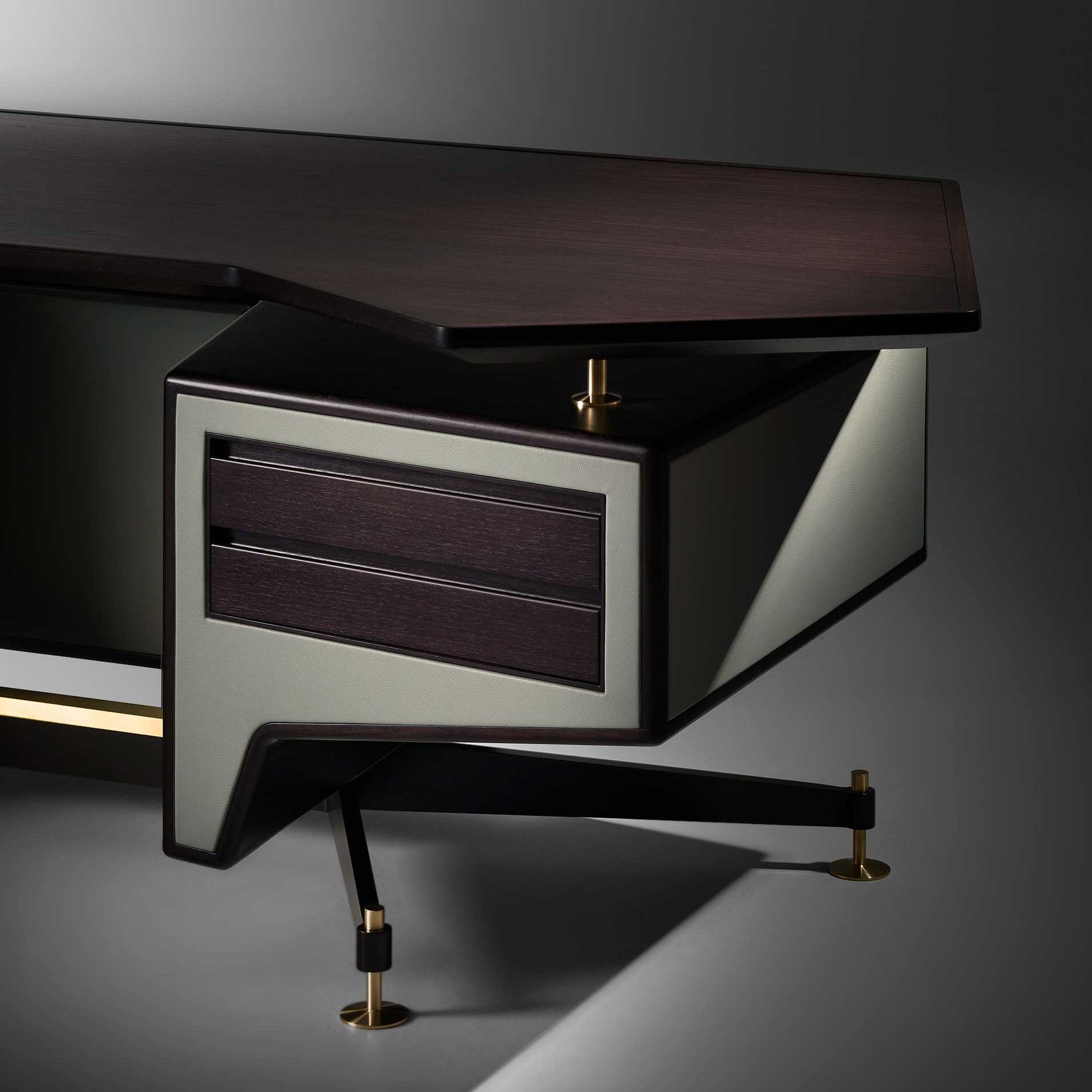
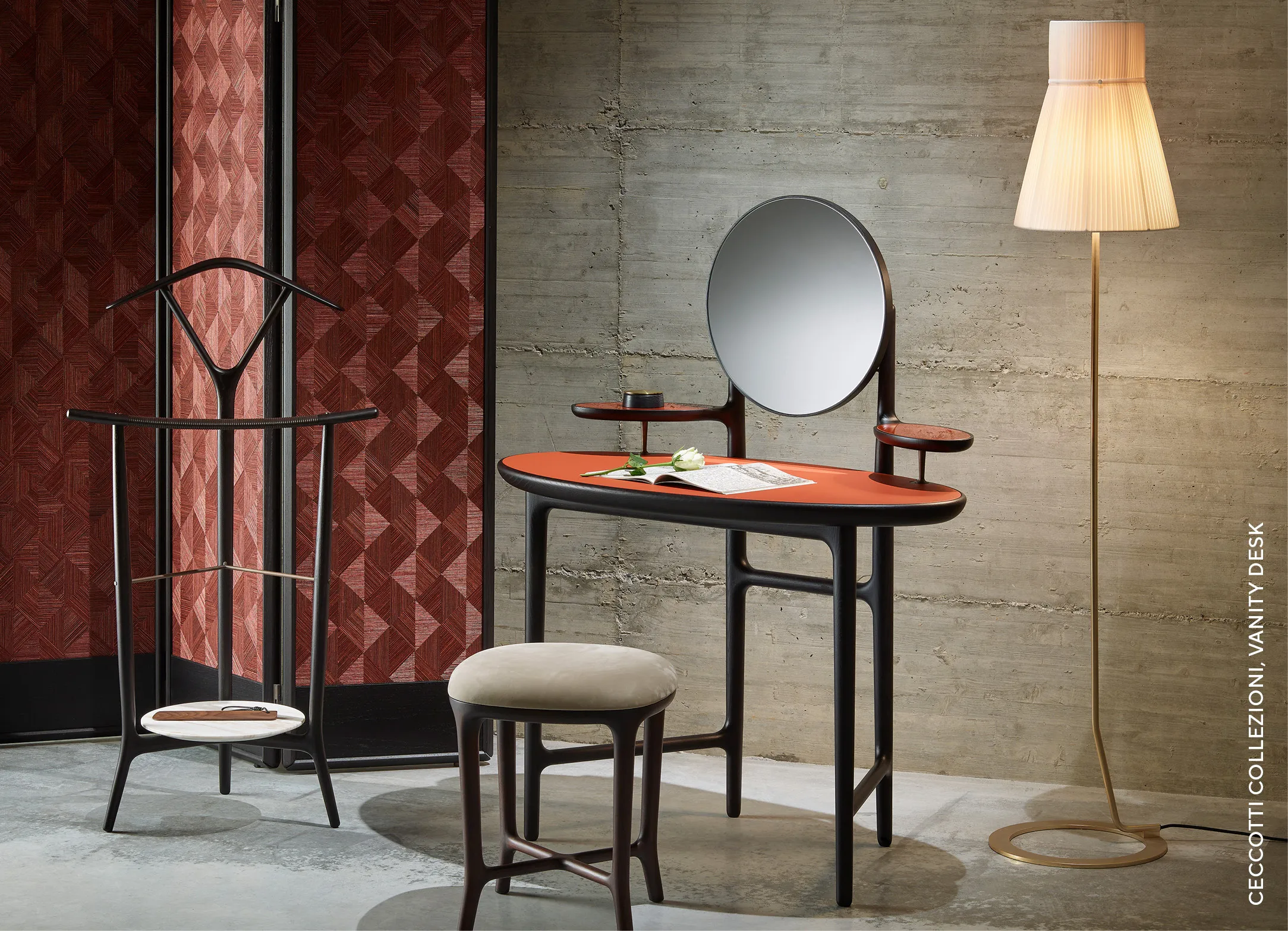
The captain’s desk. Mario Gottardi was a Venetian architect who made his name at sea: between 1953 and 1966 he won the competitions to design the interiors of four Italian liners, the Cristoforo Colombo, the Leonardo da Vinci, the Raffaello and the Michelangelo. A sketch dated 1954 shows the 604 drawn for the captain’s cabin of the Leonardo da Vinci, and it was built two years later for a company in Verona. You can still see the ship in it. Furniture at sea has to be handsome and it has to stay put, and the 604 is both.
Ceccotti makes it today in Cascina, outside Pisa, where Aviero Ceccotti opened his workshop in 1956. A central body of four leather-covered drawers is framed in solid American walnut and set on a metal base in a bronze finish, with brass footrests. Small brass spacers hold the top just clear of the body, so it seems to hover. At 255 centimetres long it is not a desk for a box room. It is a desk for someone who intends to stay at it for decades, which is rather the point. With a new culture of sustainability slowly moving through all creative industries, the idea of looking hard for an heirloom piece that passes down through generations holds a lot of value. We look hard and buy once.
Office Desk — Bodil Kjær for Karakter
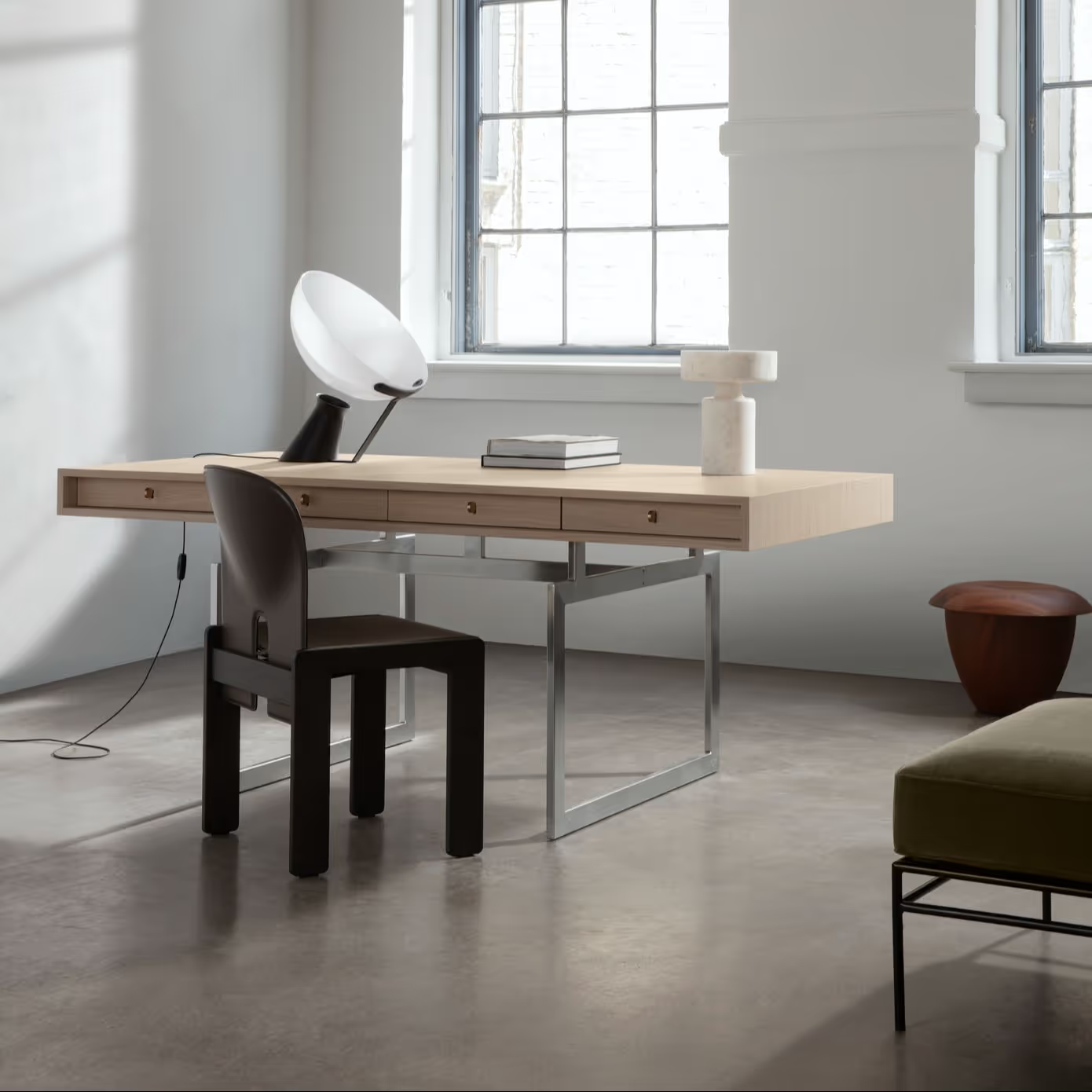
The one that floats. Bodil Kjær, born in 1932 and taught by Finn Juhl, drew it in 1959, and it was first made by E. Pedersen & Søn. She looked to Charles and Ray Eames rather than to her Danish contemporaries, and it shows. A thin steel frame carries a slim top with four drawers tucked beneath it, and the top appears to hover above the frame rather than rest on it. It has been called the most beautiful desk in the world, and also the James Bond desk. It earned the second name honestly, turning up in several of the early films, From Russia with Love among them, usually with a villain sitting behind it.
I have often wondered why the villains got it. I think it is because it is the desk of someone in complete control: nothing on show, nothing out of place. It makes the person sitting at it look composed, which is a great deal to ask of a piece of furniture. Karakter makes it today in oak or walnut, on a frame of powder-coated or brushed stainless steel, and it is the desk I would choose for a room that has to be a study by day and something calmer by night.
CH110 Desk — Hans J. Wegner for Carl Hansen & Søn

The unexpected Wegner. We think of Wegner as the master of solid wood — the Wishbone Chair, joints you want to run a thumb along. The CH110 of 1970 is something else. It was part of an office range, and its top, rails and two slim drawers are formed as one veneered unit and set on two flat stainless-steel legs. It is almost severe.
Then you open a drawer. The drawers are dovetailed, and one of them holds a small round-bottomed tray for the things you would otherwise lose. That tray is the whole of Wegner in a single detail. He could change material, change scale, change his entire vocabulary, and still be the designer who had thought about where you would put down your ring. Carl Hansen & Søn has brought the desk back into production, in oak or walnut on a stainless-steel frame.
Ventaglio — Charlotte Perriand for Cassina
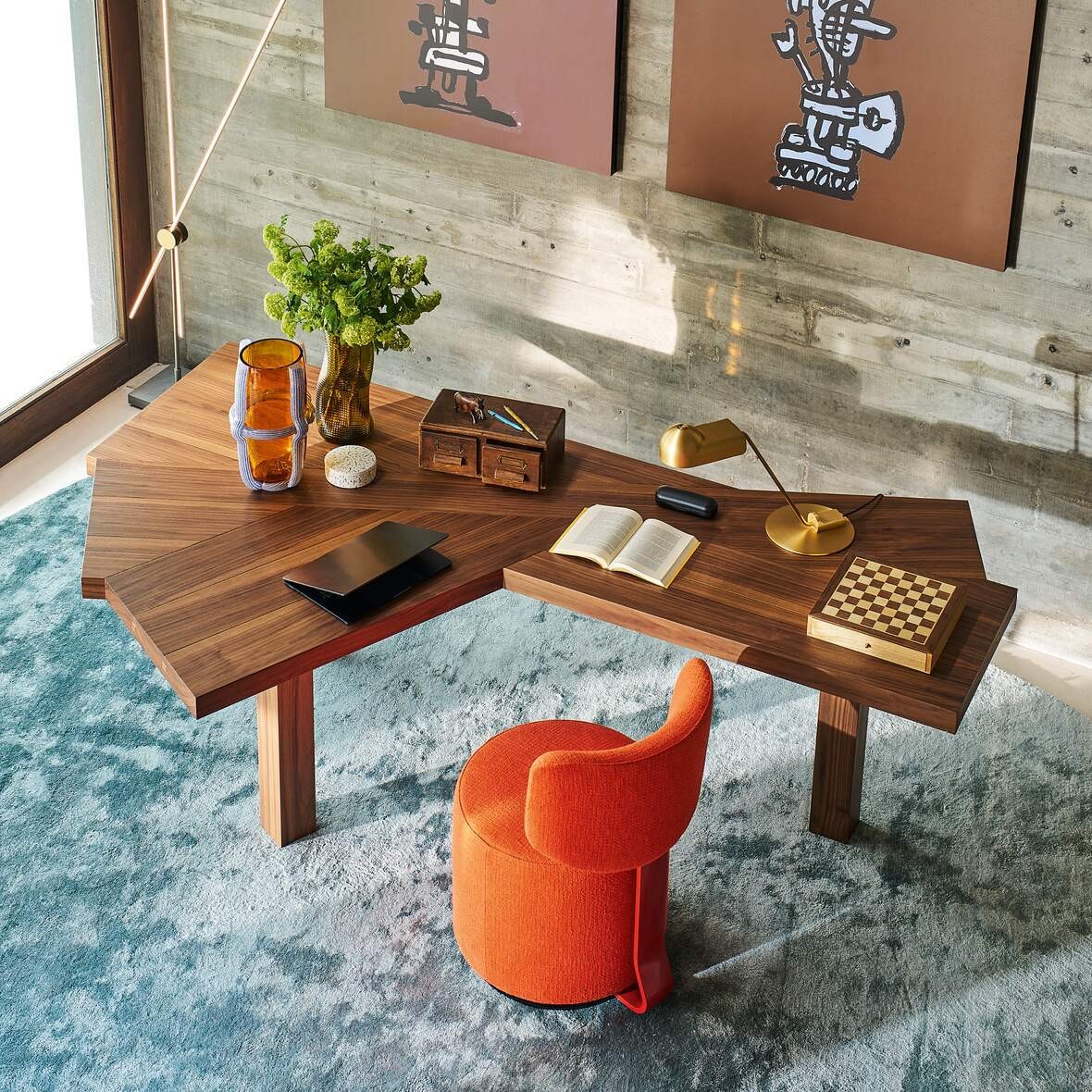
The one she designed for her own house. Charlotte Perriand drew the Ventaglio in 1972 for her chalet in Méribel, in the French Alps, and Cassina now makes it as the 511. Ventaglio is Italian for fan, after the shape of its top, which is made of fourteen oak staves. It is a table first, and Cassina offers it for the dining room, the kitchen or the living room as readily as for work.
That is exactly why I love it as a desk. Perriand spent her working life arguing that furniture should serve the way people actually live, and in a mountain chalet the table where you write letters is also where you eat, play cards and spread out the map. The Ventaglio does not ask you to choose. For a family home where the study has been squeezed out, it is the most honest answer I know: a beautiful table that does not mind being worked at.
Out of Line Homedesk — Bieke Casteleyn
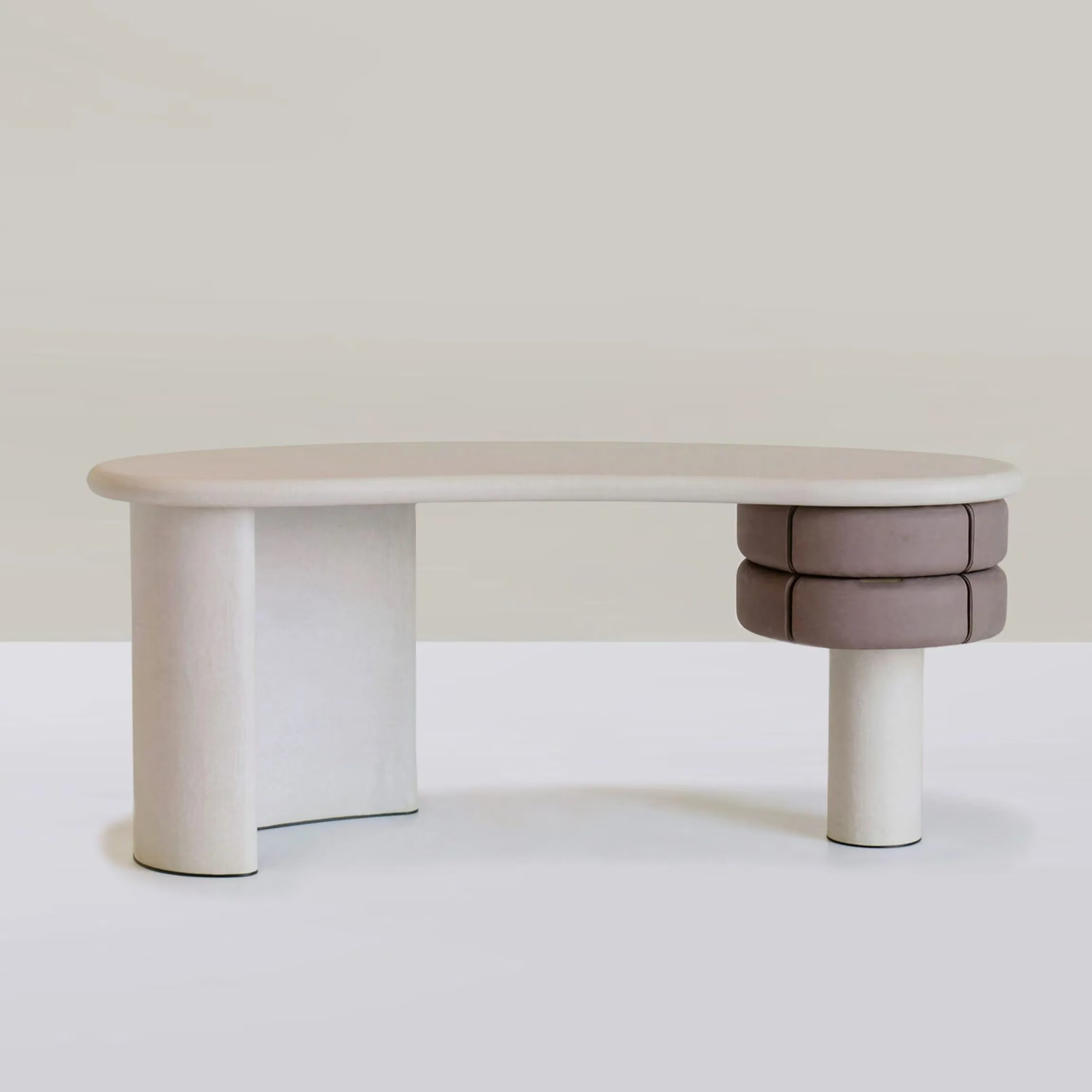
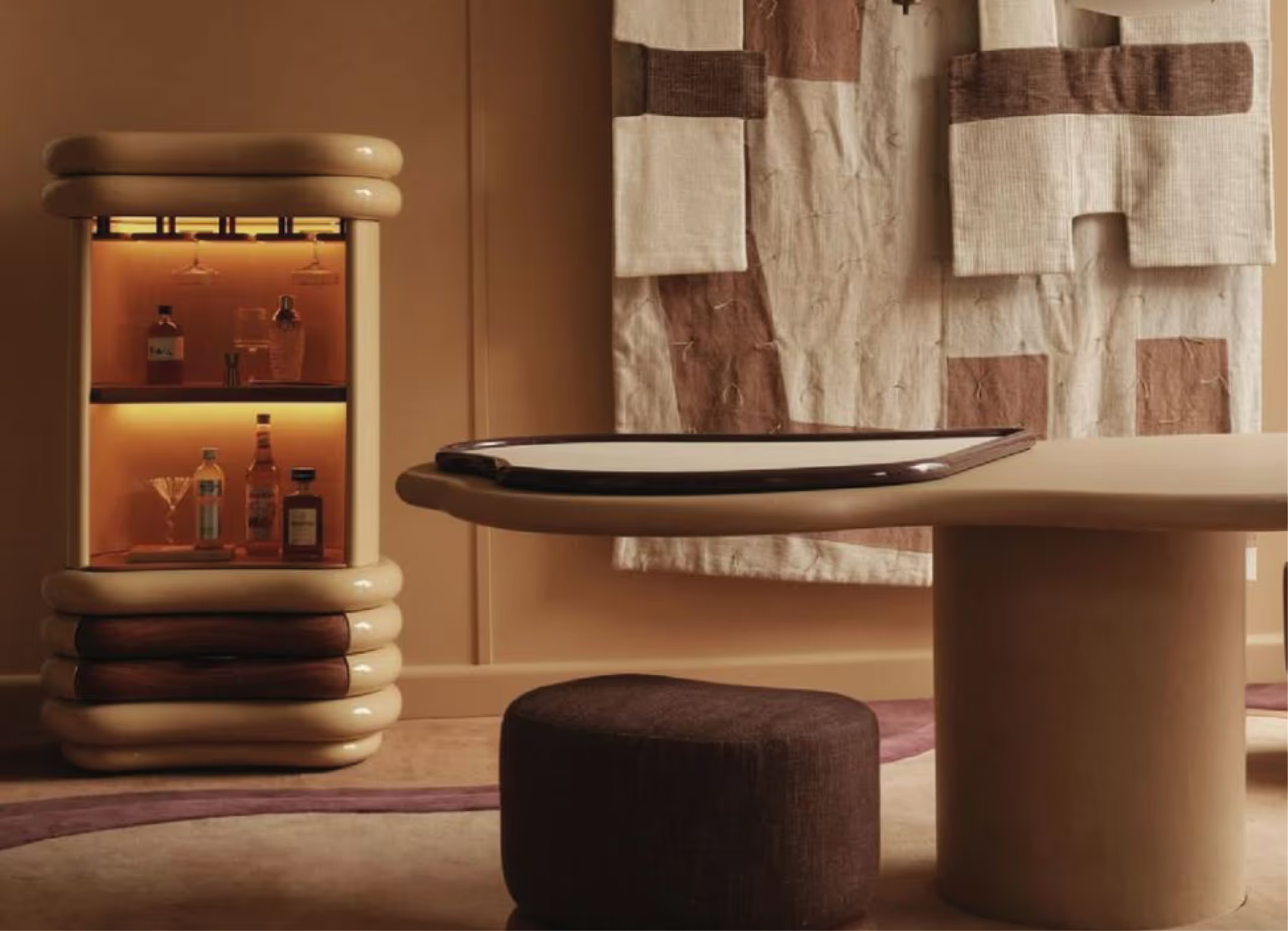
The newest here, and the most sculptural. Bieke Casteleyn studied in Ghent and Milan and set up her studio in Belgium in 2012. Her Out of Line collection followed in 2015, worked largely in cement plaster, and the Homedesk belongs to it: a desk in concrete on a stucco base, with two drawers and a softly curving outline that is never quite straight. Each piece is made by hand to order in Belgium and carries a small label signed by her.
After four desks that try in one way or another to disappear — floating, hovering, standing on two thin legs — here is one that sits squarely on the floor and is glad to be looked at. Concrete is not the material you expect in a home office, and that is what makes it work there. It reads as a piece of sculpture that happens to have drawers, which suits a desk that lives in the sitting room and has to earn its place at the weekend.
What the five have in common
A ship’s captain, a Bond villain, a man who needed somewhere for his ring, a woman writing letters in the mountains, and whoever is lucky enough to keep the Homedesk in their sitting room. On paper the five share very little: walnut and leather, steel and veneer, oak staves, concrete. What they share is that each was drawn for a particular person at a particular kind of work, and that every one of them looks as considered with the laptop closed as with it open.
That is the test I would set any desk now. It will spend more hours being looked at than being used, so it has to be functional sculpture in the plainest sense: an answer to a question of living that still holds the room when nobody is asking it anything. Choose it the way you would choose a dining table, not a printer stand. Think twice, buy once.
Decorex returns to Olympia London from 11 to 14 October 2026, and three makers from the Tollgard collection are part of it. Each works in a single material: crystal, stone and solid wood.
Fairs are loud places. Thousands of pieces compete for attention, and it is easy to walk the aisles and remember almost nothing. What stays with you is usually the work where you can feel the hand behind it: someone who has spent a lifetime with one material and knows exactly what it will do. Here is why we think these three are worth seeking out.
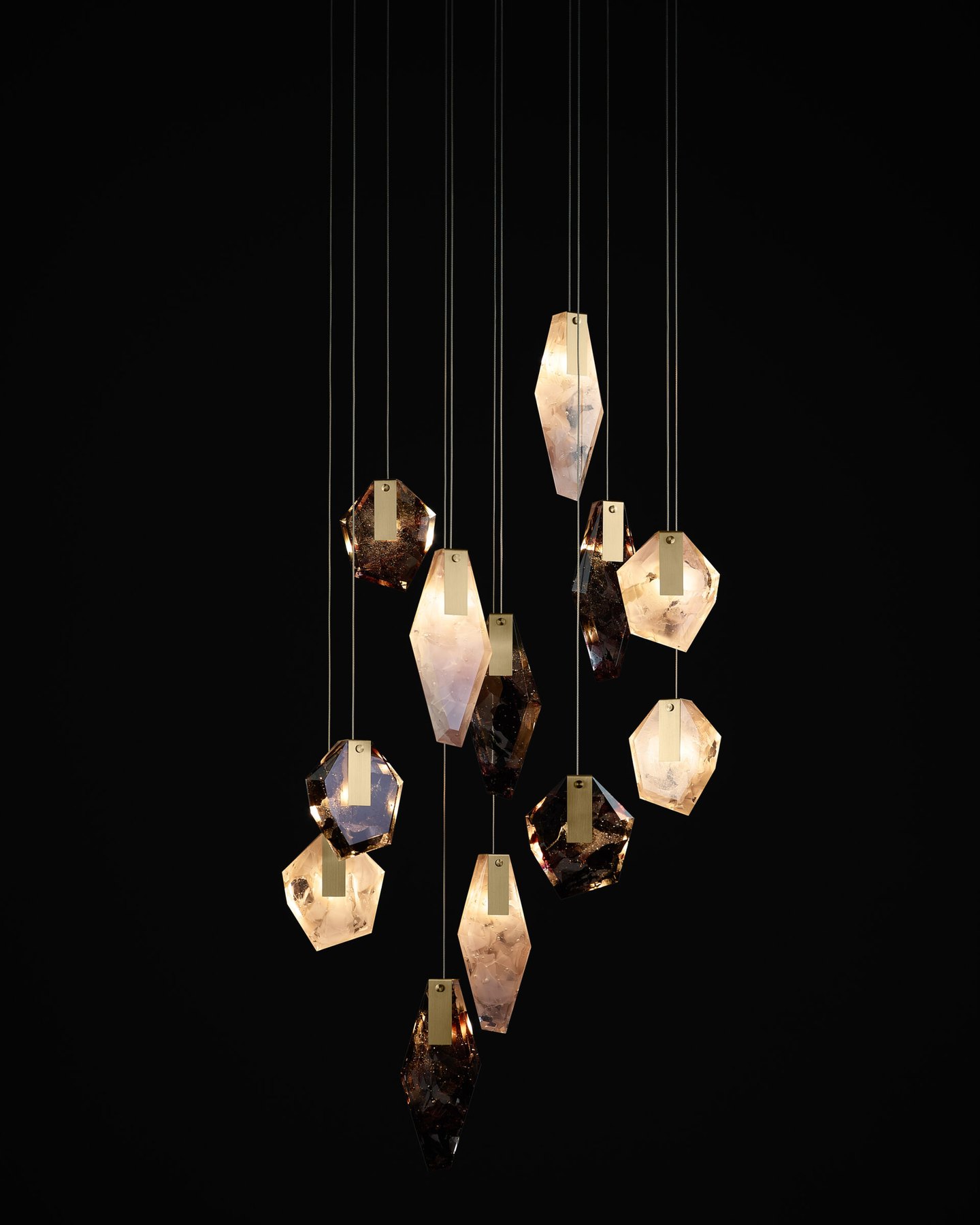
Light, blown by hand.
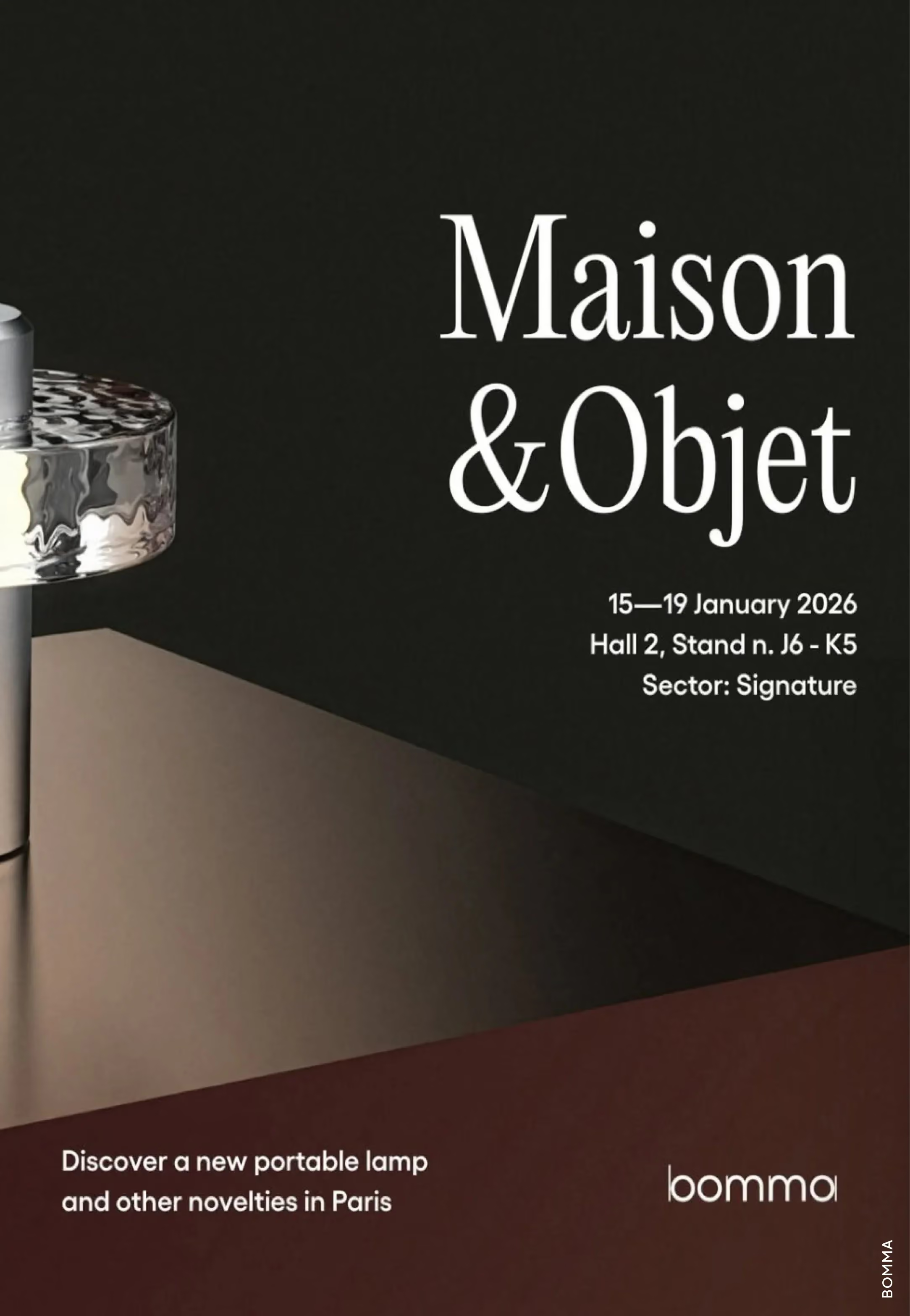
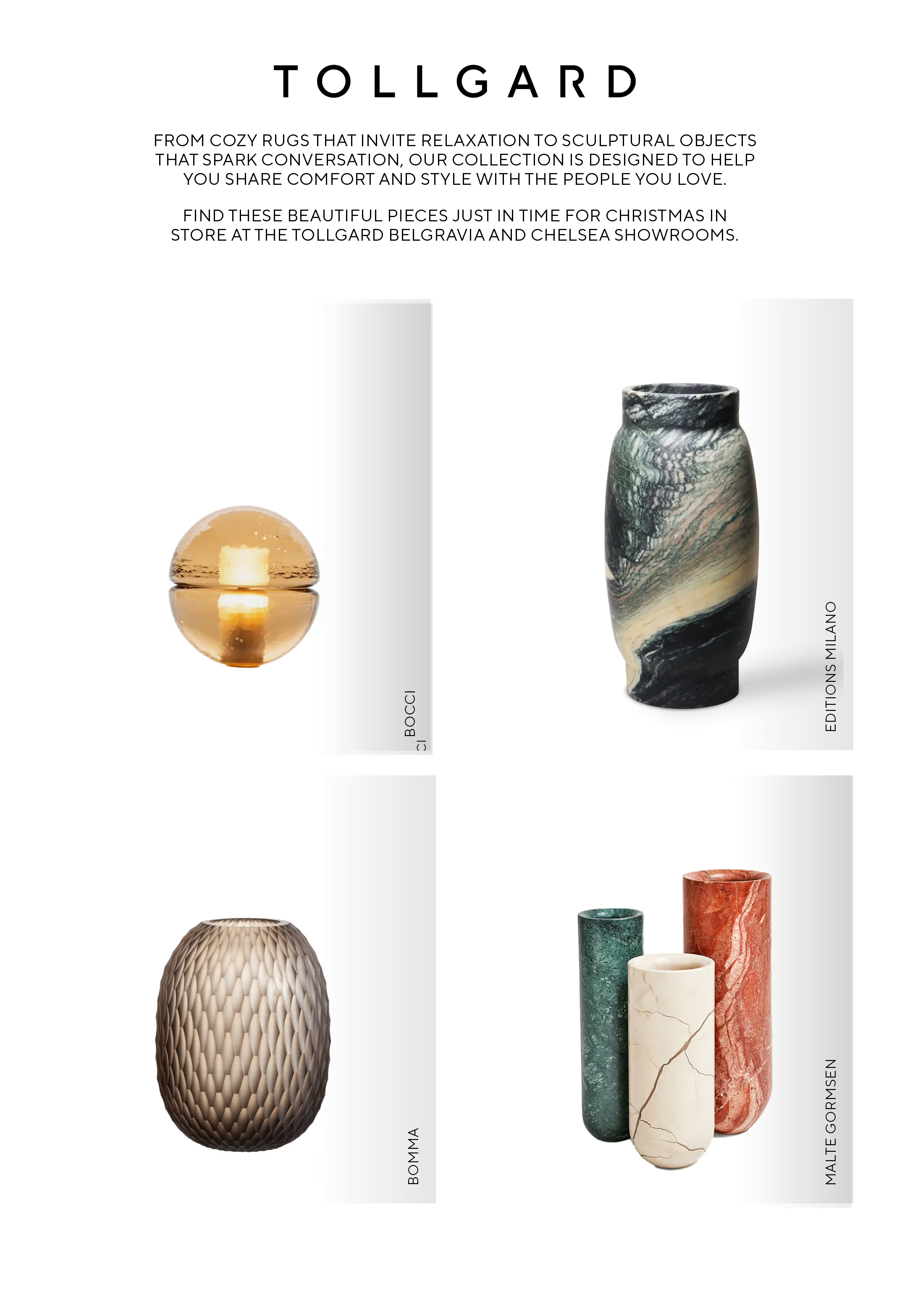
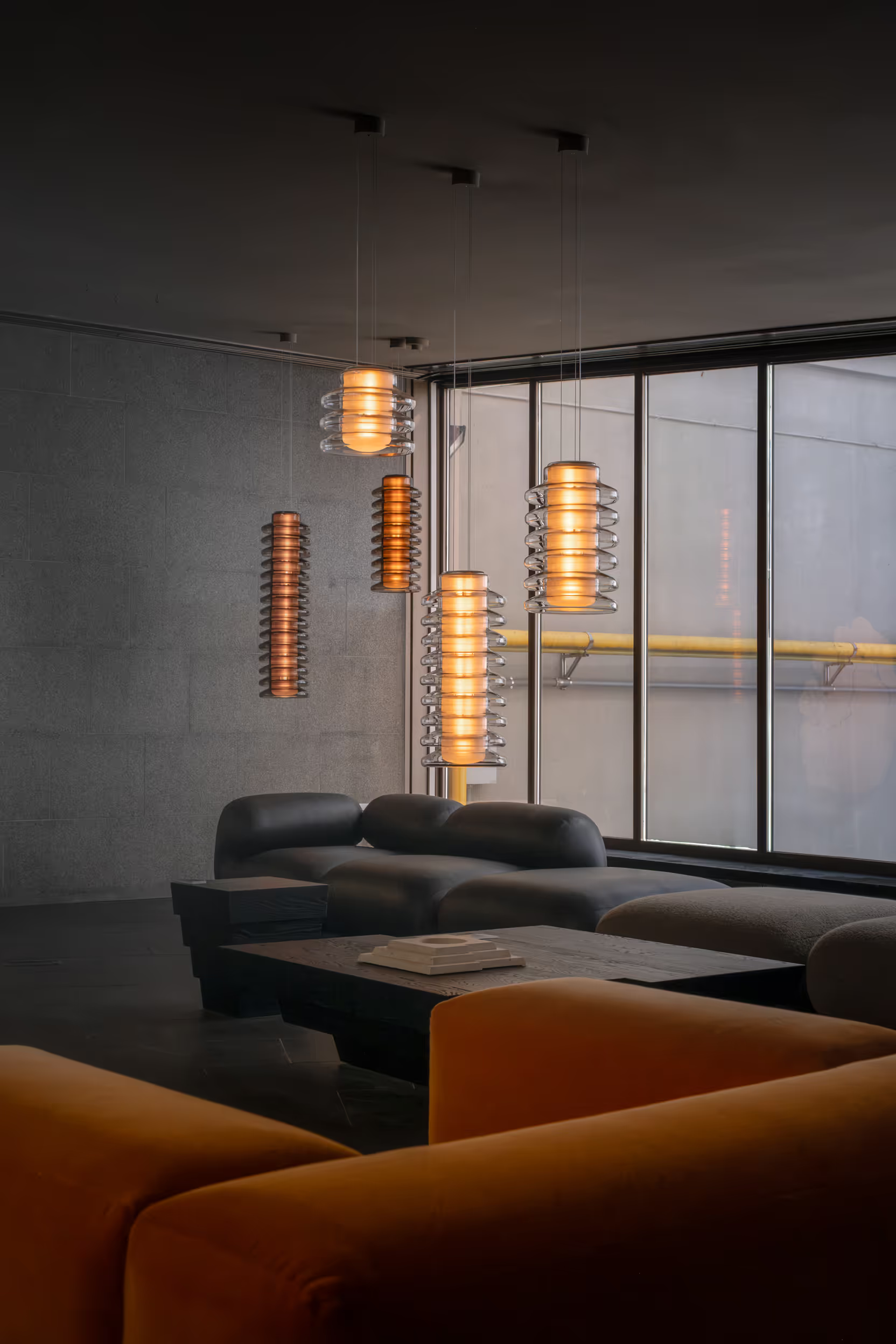
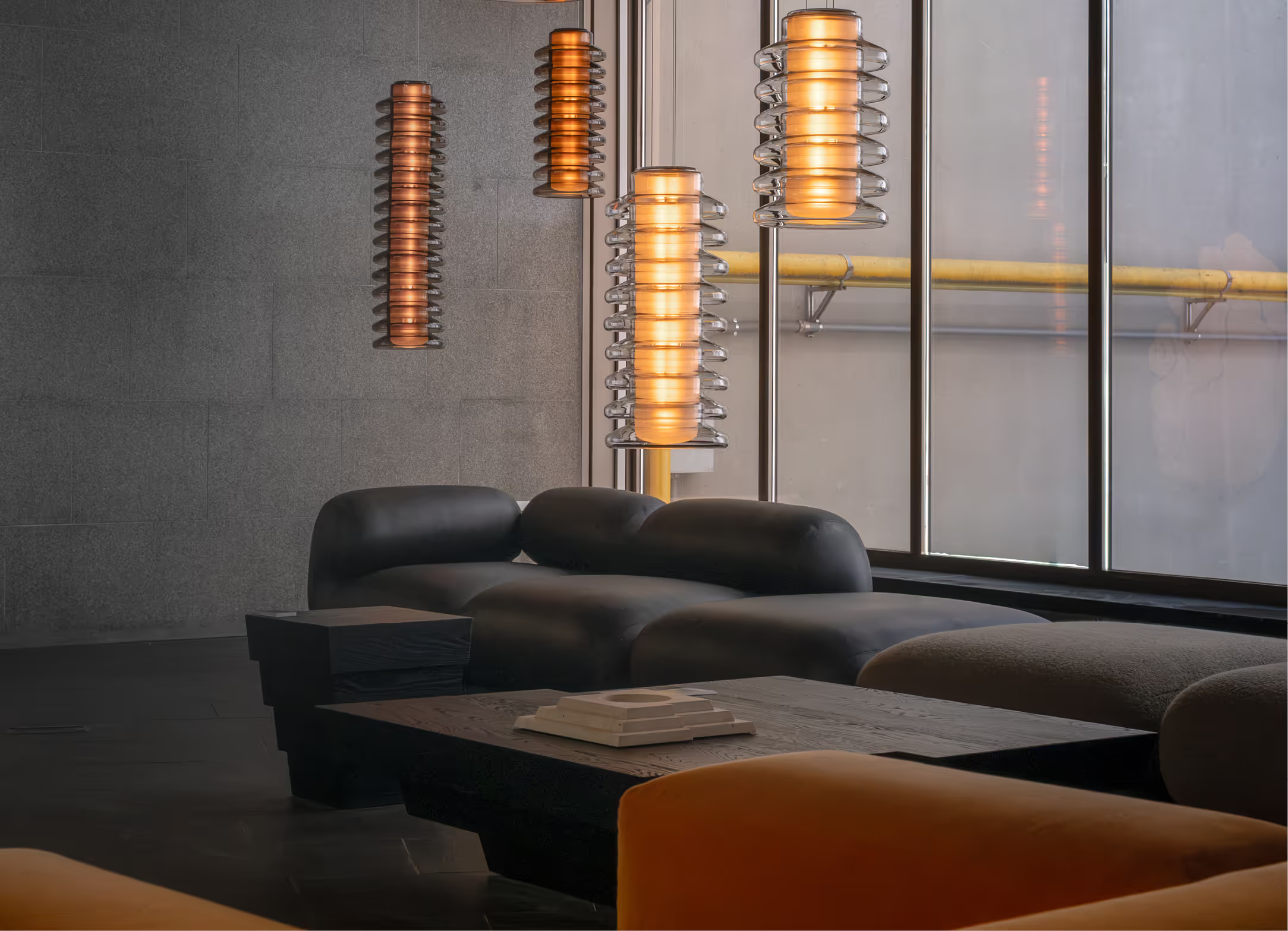
Bohemian glass has been made in the Czech lands for centuries, and Bomma carries that tradition into contemporary lighting. Every piece begins as molten crystal on the end of a glassblower's pipe and is shaped by hand, so no two are quite alike. Light passing through hand-blown crystal never looks flat. It bends, catches and scatters, and a pendant becomes something closer to functional sculpture: as beautiful switched off as it is switched on.
Find them at: Stand G50, Decorex, Olympia London
Stone that holds light.
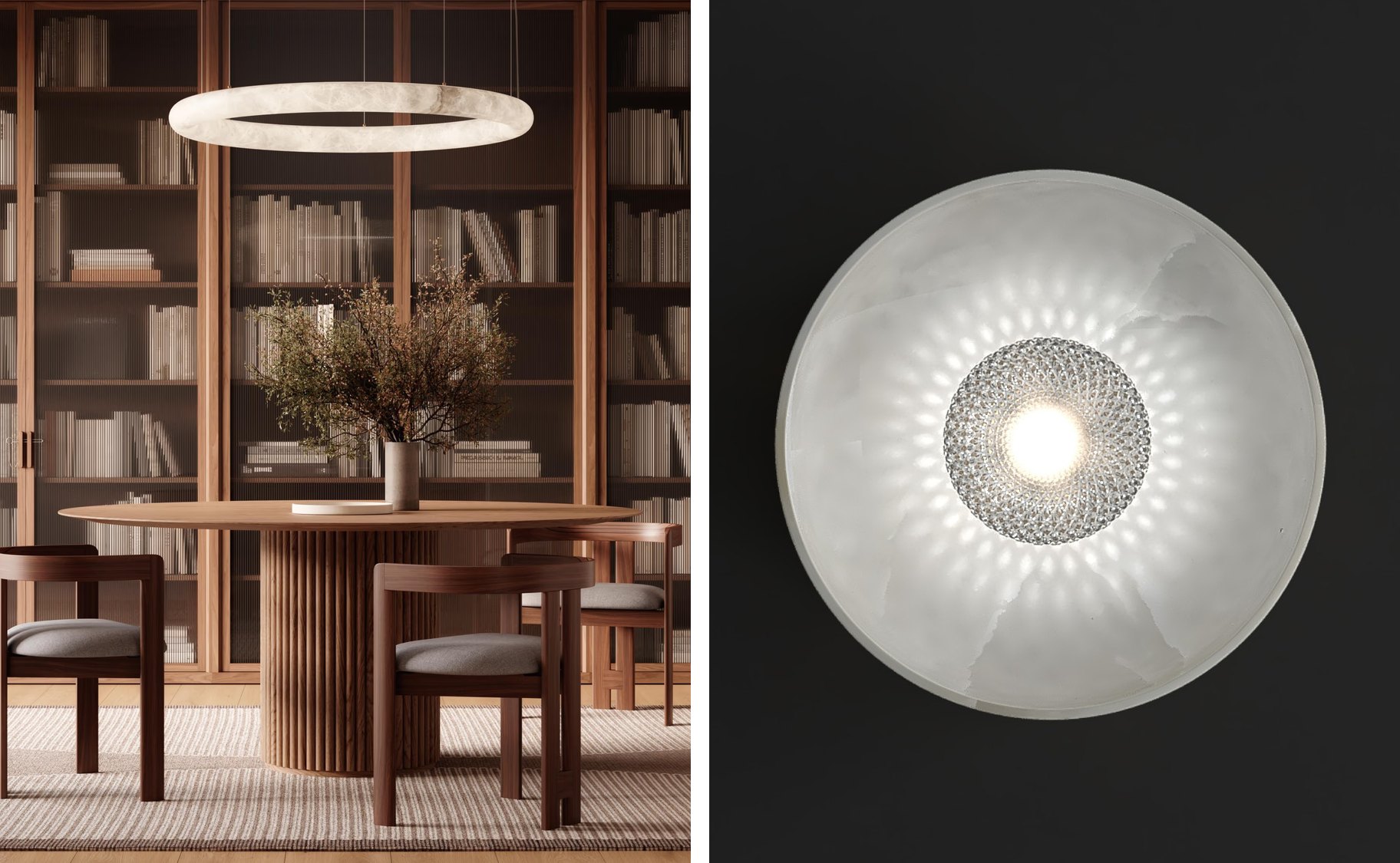
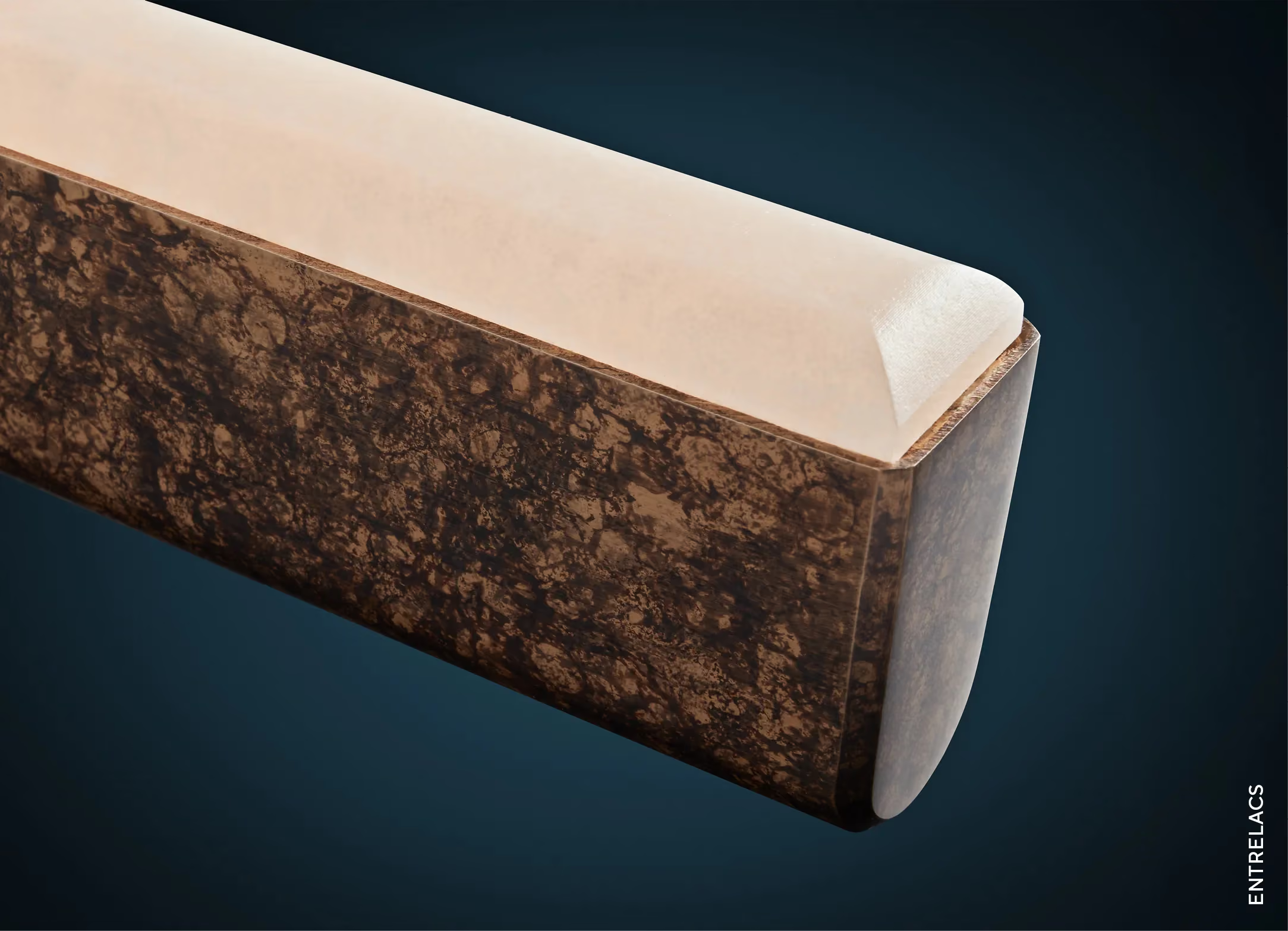
Alabaster is one of the few stones that lets light through. Lit from within, the whole surface glows, and its veins and clouds become part of the light itself. Founded by brothers Riccardo and Alberto Ongarato in Padua, Alabastro Italiano pairs Italian alabaster with brass, leather and blown glass. The pieces feel ancient and modern at once, and because each slab of stone is different, every light carries a pattern that belongs to it alone.
Find them at: Stand D71, Decorex, Olympia London
From nature to home, in the VIP Lounge.
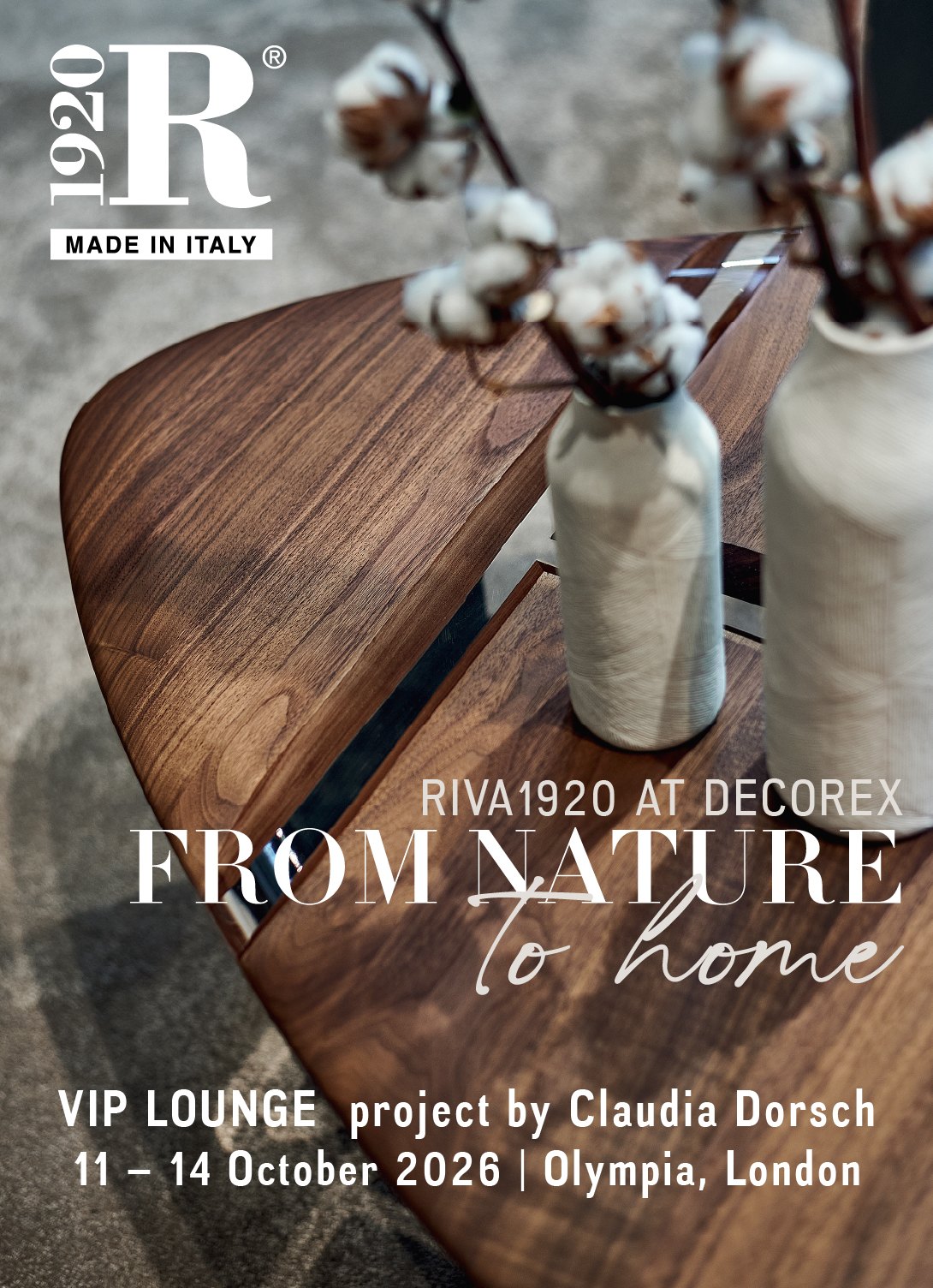
In Cantù, just north of Milan, RIVA1920 have worked solid wood for more than a century, with a respect for the tree that runs through everything they make. At Decorex their furniture furnishes the VIP Lounge, selected by Claudia Dorsch Design Studio under the theme “From Nature to Home”. It shows how solid wood can make a room feel welcoming and sophisticated while staying contemporary.
The brand is close to our hearts. Earlier this year RIVA1920 launched Suiseki, a collection we designed together with Castellani. Its oval table sets a single slab of marble into a solid wood frame, on three sculptural legs. Seeing RIVA1920 at the centre of the room at Decorex is a quiet pleasure.
Find them at: the VIP Lounge, Olympia London
The thread that ties them together
Crystal, stone and wood are three very different materials, and the makers behind them share one instinct: let the material lead. This is how we like to furnish a home. Choose fewer things, choose them well, and let each one carry its own story. Pieces like these are made to be lived with for decades. They become heirlooms rather than purchases.
If you are at Olympia this week, we hope you'll stop by and see them. If you aren't, all three makers are part of the Tollgard collection, and we would be delighted to show you their work.
To enquire about pieces featured here, or to discuss a project, contact us: sales@tollgard.com.
All Articles



.webp)




Blog title heading will go here

Blog title heading will go here

Blog title heading will go here

Blog title heading will go here
Blog title heading will go here
Blog title heading will go here
Blog title heading will go here

Blog title heading will go here
