

Take Five: My favourite iconic armchairs
Take Five. A series in which I empty my pockets and set out the things I keep going back to – magazines, hotels, books, restaurants, furniture and lighting brands – and try to say honestly why. It is not a ranking, and nothing in it is sponsored. Think of it less as a list of recommendations than as being handed the pile from beside my desk.
This time, the armchair. Of all the furniture in a house, it is the piece that belongs most to one person. The sofa is shared and the dining chair is borrowed for an evening, but the armchair is where somebody reads, dozes, takes the first coffee of the day and the last drink of it. Every family knows whose chair is whose.
That makes it the most honest test of a designer. An armchair has to be generous without being shapeless, and sculptural without being hard. It is seen from every side, and it has to look right when it is empty, which in most living rooms is most of the time.
“We believe in functional sculpture: furniture, lighting and accessories that answer questions of living and add aesthetic value whether they are at work or not.”
– Tollgard, House Style
An armchair is functional sculpture in its purest form. The five below are the ones I would most like to be left alone in.
A declaration before we begin: we work with all five makers, and the Twenty Two is made by Ceccotti Collezioni, whose London showroom we run. Read what follows knowing it. I have put them in the order they were drawn, from 1949 to last year. Read in sequence, they make a short history of what we have wanted from a chair of our own.
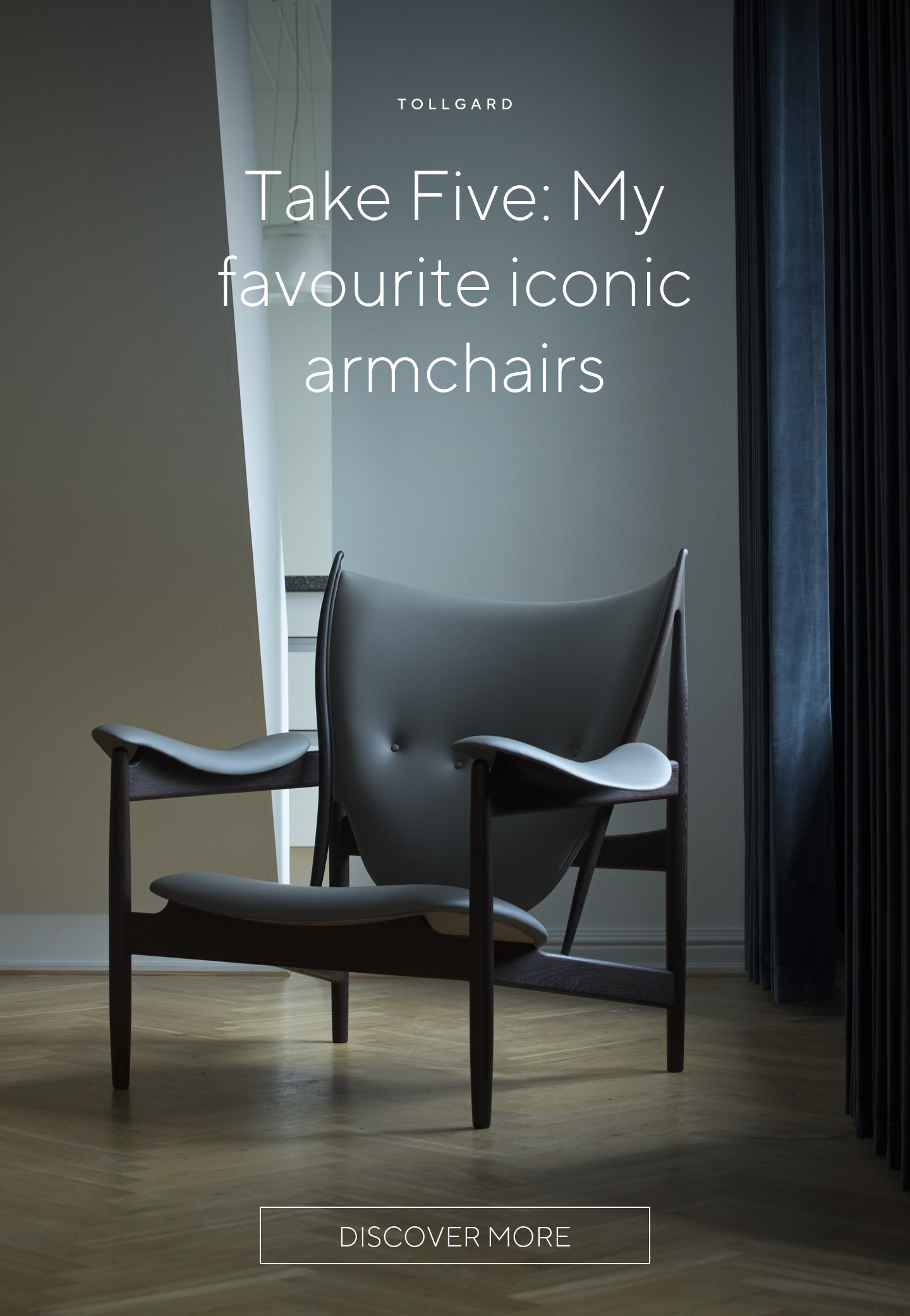
Chieftain Chair – Finn Juhl for House of Finn Juhl
The one that started it all, at least for me. Finn Juhl drew the Chieftain in 1949, and the cabinetmaker Niels Vodder, who turned Juhl’s drawings into furniture for more than twenty years, made it for that year’s Cabinetmakers’ Guild exhibition in Copenhagen.
It is a big chair, broad and low, with a frame of solid wood and a seat, back and arms of leather that seem to float on it rather than sit inside it. Juhl had trained as an architect, and you can see it in the way the parts are separated, each one given its own job and its own shape. House of Finn Juhl has made it again since 2002, each one stamped with his signature. I am lucky enough to have a Chieftain in my own home. It sits in front of the fireplace, and it is my pride and joy.
“Juhl wrote that an ‘architect should strive for unity but not uniformity, and establish a complete thought process behind everything’. This for me translates into the ‘red thread’ that we weave through our own projects: a unifying design narrative that runs through each project, each piece of furniture that we design, and against which we weigh every decision.”
– Staffan Tollgård, My Icon: Finn Juhl

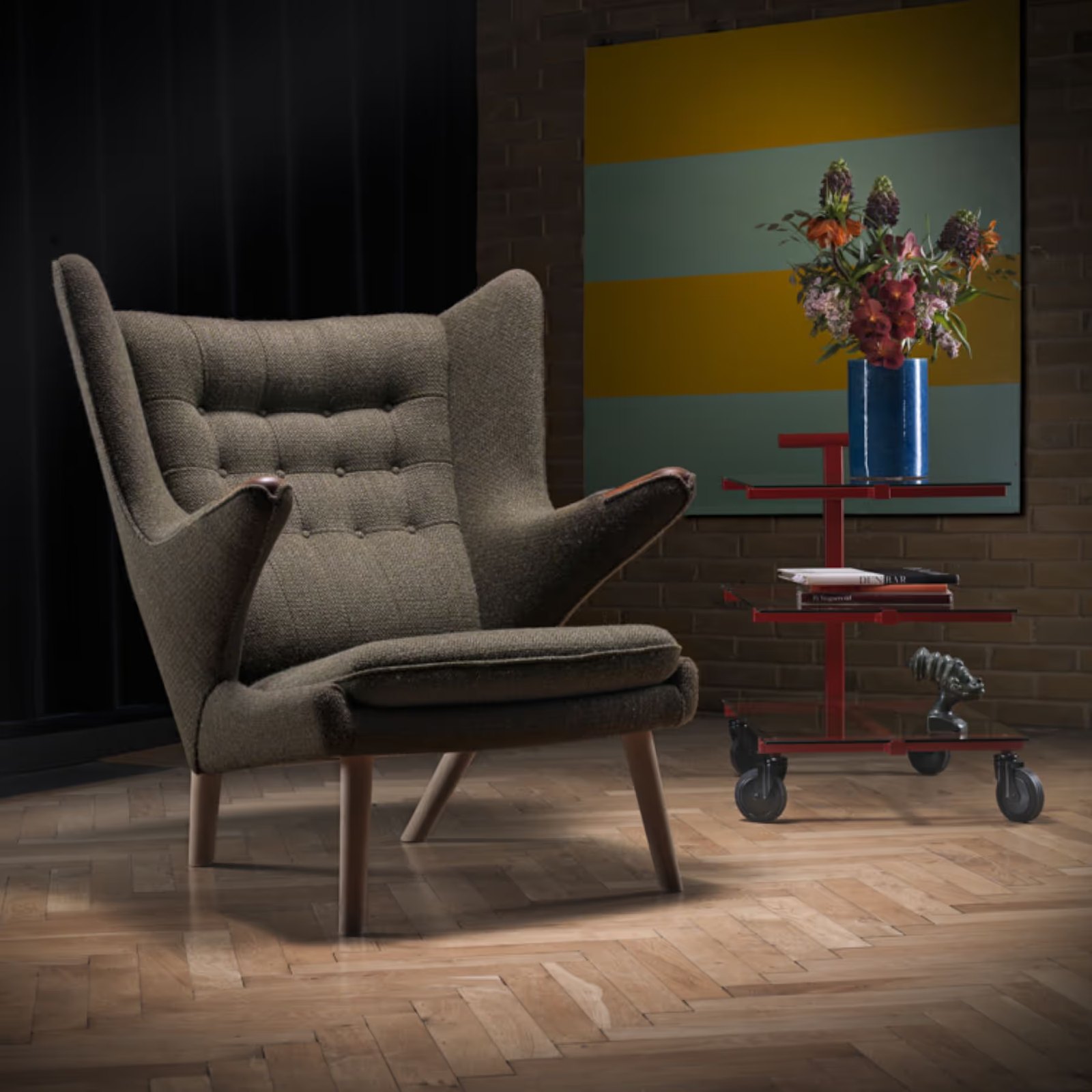
PP19 Papa Bear Chair – Hans J. Wegner for PP Møbler
The one that holds you. Hans Wegner drew it in 1951, two years after the Chieftain, and it could hardly be more different. Where Juhl’s chair is architecture, Wegner’s is an embrace: a high, winged back and two great arms that reach forward and end in solid wooden paws, which is how it earned its name. It was first made by A.P. Stolen. PP Møbler, the family workshop in Allerød north of Copenhagen, made the frames from 1953, and since 2003 it has made the whole chair.
The paws are the part people talk about, but the reason it works is under the fabric. It is upholstered by hand in the traditional way, and it is that work, more than the paws, that makes it so comfortable. This year it turns seventy-five, and PP Møbler has made an anniversary edition to mark it. It is the chair I would put by a fire, in the warmest corner of the house, and leave there for the next generation.
D.151.4 – Gio Ponti for Molteni&C
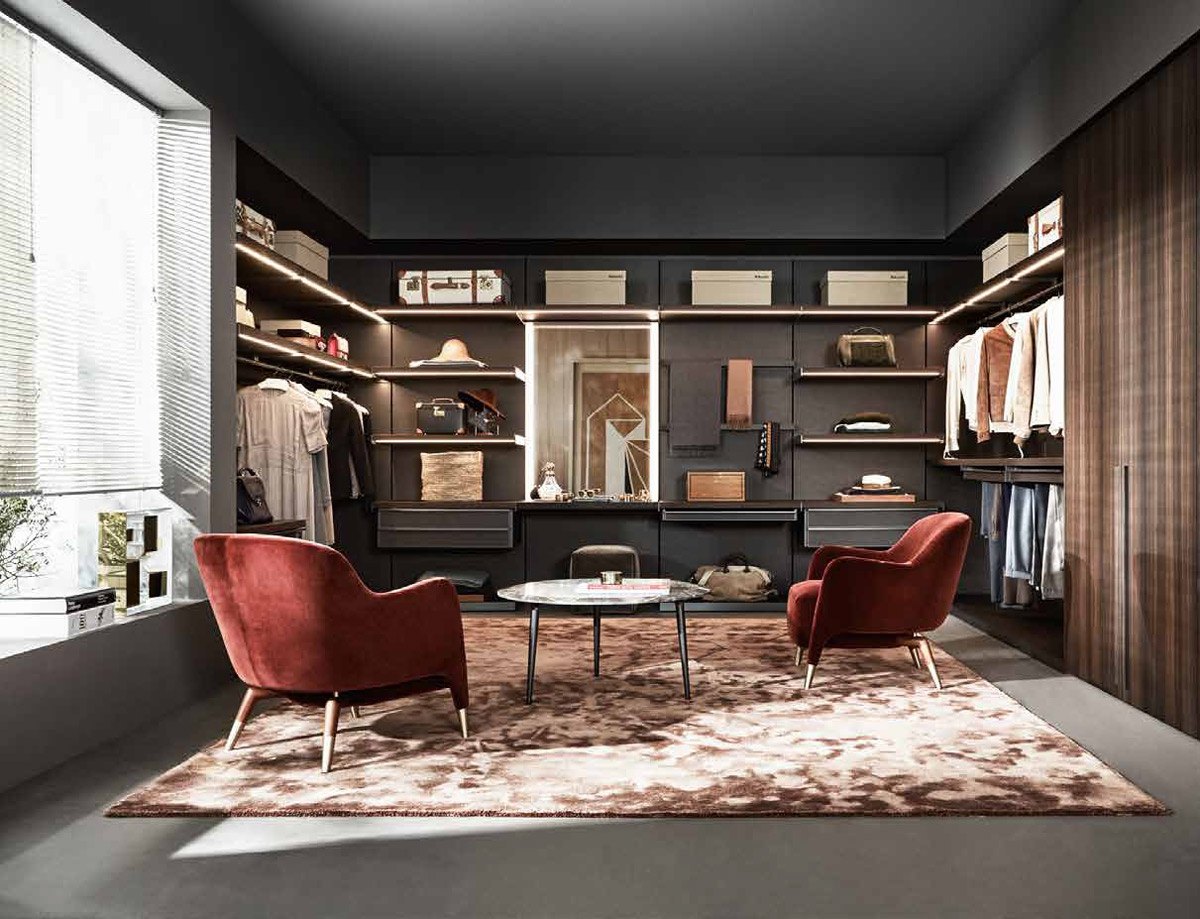
The one that went to sea. Also from 1951, but from Milan rather than Copenhagen, and from a very different brief. After the war, Gio Ponti was asked to furnish the great Italian ocean liners, among them the Conte Grande, the Andrea Doria and the Giulio Cesare, and he drew this easy chair for them, in slight variations for each ship.
You can feel that history in it. It is compact and sloping, made to be comfortable in a cabin and elegant in a first-class lounge, with a semicircular back that wraps around you and slender, splayed legs in walnut. Molteni&C now makes it in its Gio Ponti collection, drawn up with the Gio Ponti Archives from his original drawings. It is the most portable chair on this list, and the one I would choose for a bedroom or a study, where an armchair has to work hard in a small space.
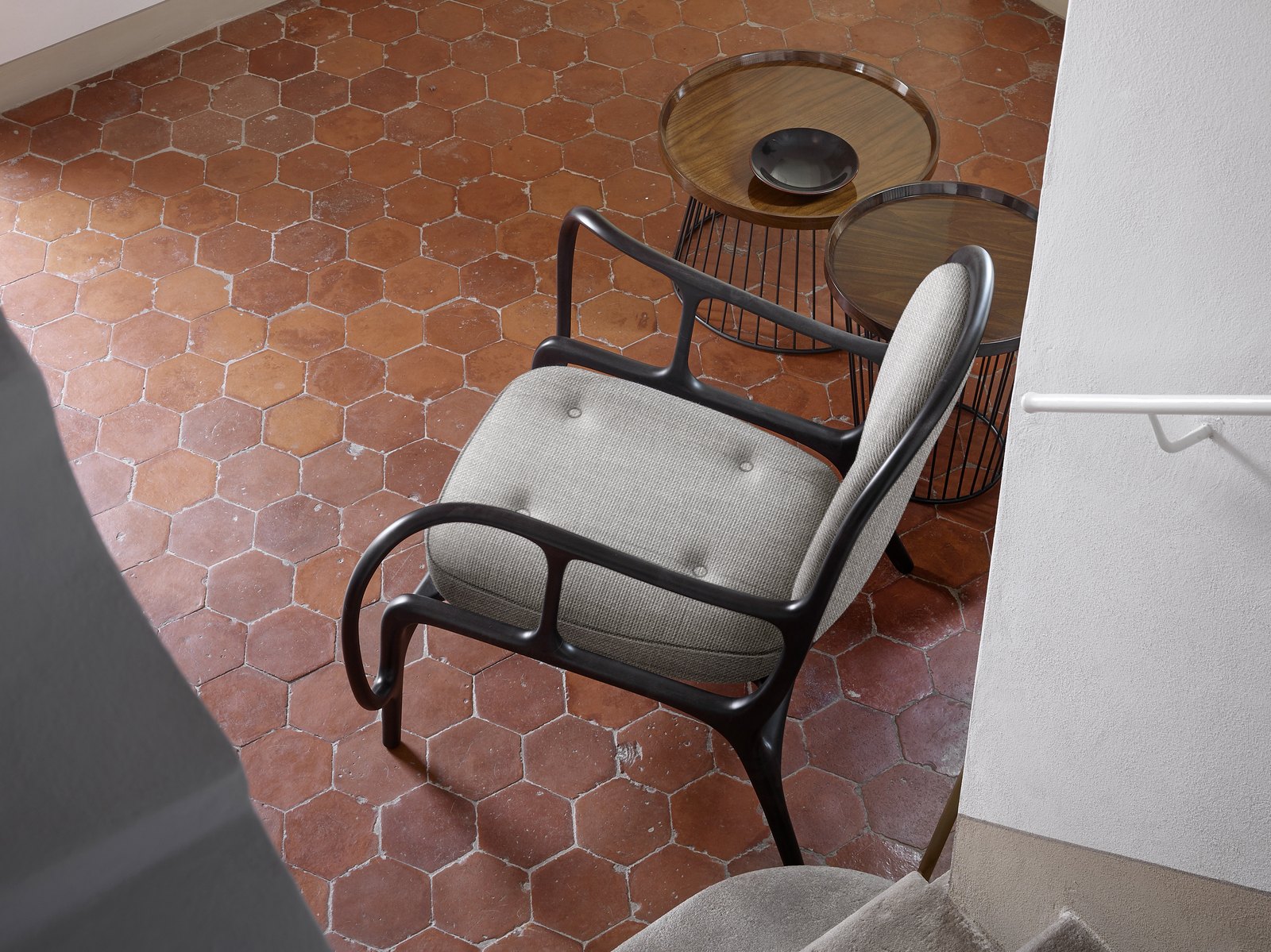
Twenty Two – Jaime Hayon for Ceccotti Collezioni
The one with a sense of humour. Jaime Hayon, the Spanish designer, made his first chair for Ceccotti Collezioni in 2009 and launched it at the Salone del Mobile in Milan. Its name comes from the twenty-two pieces of solid wood, walnut or maple, that go into its frame, each one shaped and joined by hand at Ceccotti’s workshop in Cascina, outside Pisa.
Hayon is known for colour and play, and there is plenty of wit in the Twenty Two, right down to the little leather-covered tray tucked beneath the seat. But it is the craftsmanship that carries the joke. Without Ceccotti’s cabinetmakers it would be a sketch. With them it is a piece of furniture you could hand down, which is exactly what we mean when we talk about heirloom pieces.
Rua Ipanema – Yabu Pushelberg for Man of Parts
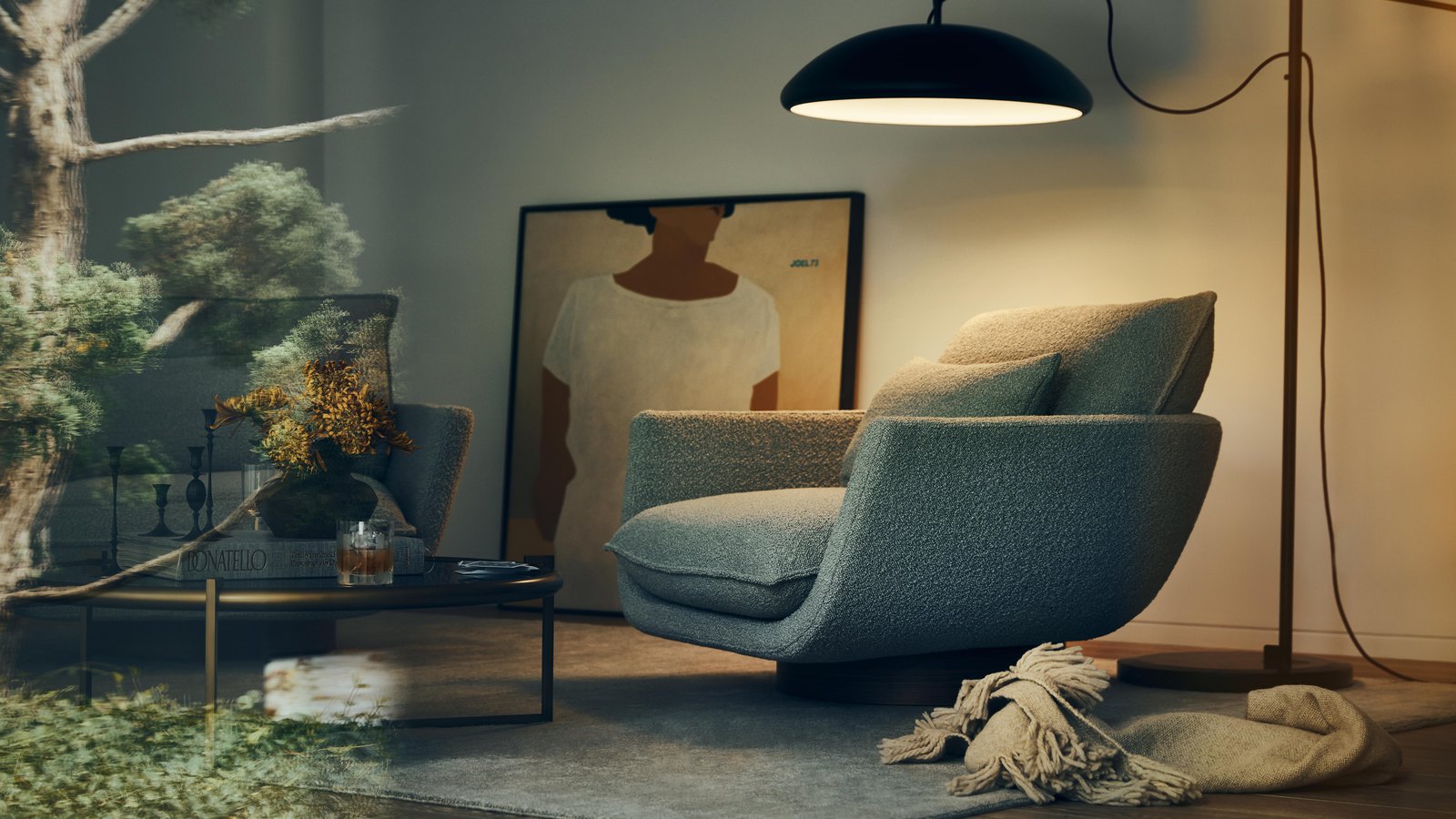
The one that is still new. Man of Parts was founded in Toronto in 2019 by Stephan Weishaupt as a collection for a way of living rather than a single look, and it last appeared in this series with the Alexander Street stool. Rua Ipanema was drawn by Yabu Pushelberg, the studio of George Yabu and Glenn Pushelberg, and launched in Milan in 2025.
Its name is a street in Rio, and its lines come from the city’s great modernist, Oscar Niemeyer: a low, wide shell that sweeps around you like one of his ramps, on a base of wood or metal. It is relaxed in the way that only very careful design can be. The shell and cushions can be upholstered in contrasting fabrics or leathers, so the same chair can sit quietly in a calm room or become its one bold moment. It has not had time to become an icon yet. Give it seventy-five years.
What the five have in common
A chieftain, a bear, an ocean liner, twenty-two pieces of wood and a street in Rio. Two Danes, an Italian, a Spaniard and a pair of Canadians, drawn across seventy-six years. On paper they share very little. What they share is that each one is as good to look at empty as it is to sit in, and each was made by people who cared about the parts you cannot see: the joint, the frame, the upholstery under the cover.
They also each say something about the person who sits in them. The Chieftain is for someone who likes to hold court. The Papa Bear is for someone who wants to disappear into a book. The D.151.4 is for the smaller room, the Twenty Two for the person with a twinkle in their eye, and the Rua Ipanema for the one who would rather lounge than sit.
“We think about designing a room in terms of a film script. How many heroes can the piece hold? What can the budget stretch to? What’s the hero shot? This can be a key view or architectural feature that calls out for a painting, sculpture or attention-grabbing moment. These are often the heirloom pieces that we go hunting for.”
– Staffan Tollgård, Design Hunter, 2019
In most of the rooms we design, the armchair is one of those heroes. Choose it as you would choose a painting, sit in it before you buy it, and then keep it. Think twice, buy once.