
Glove Cabinet
by
Finn Juhl
From
0
0
Inc VAT
Inc VAT
Frame:
Cherry
,
Steel
,
Brass
,
Upholstery:
Finish/Colour:
Cherry
,
Dimensions:
69 x 35 x 51.5h cm
Seat Height:
Variations:
Lead Time:
Color Temp:
Dimming:
IP Rating:
Certification:
Origin:
Denmark
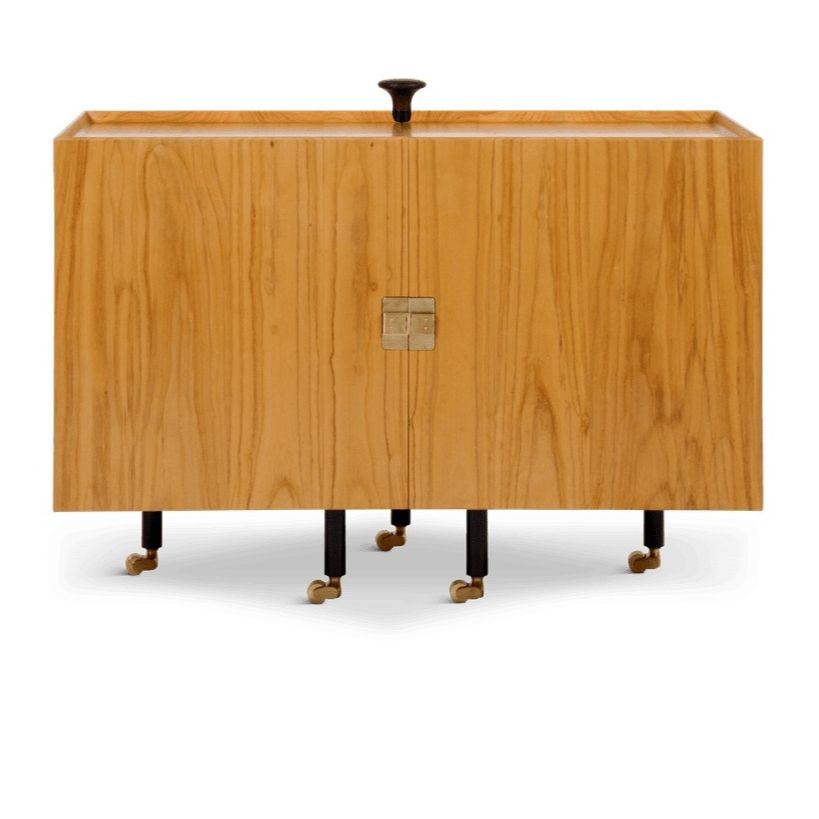
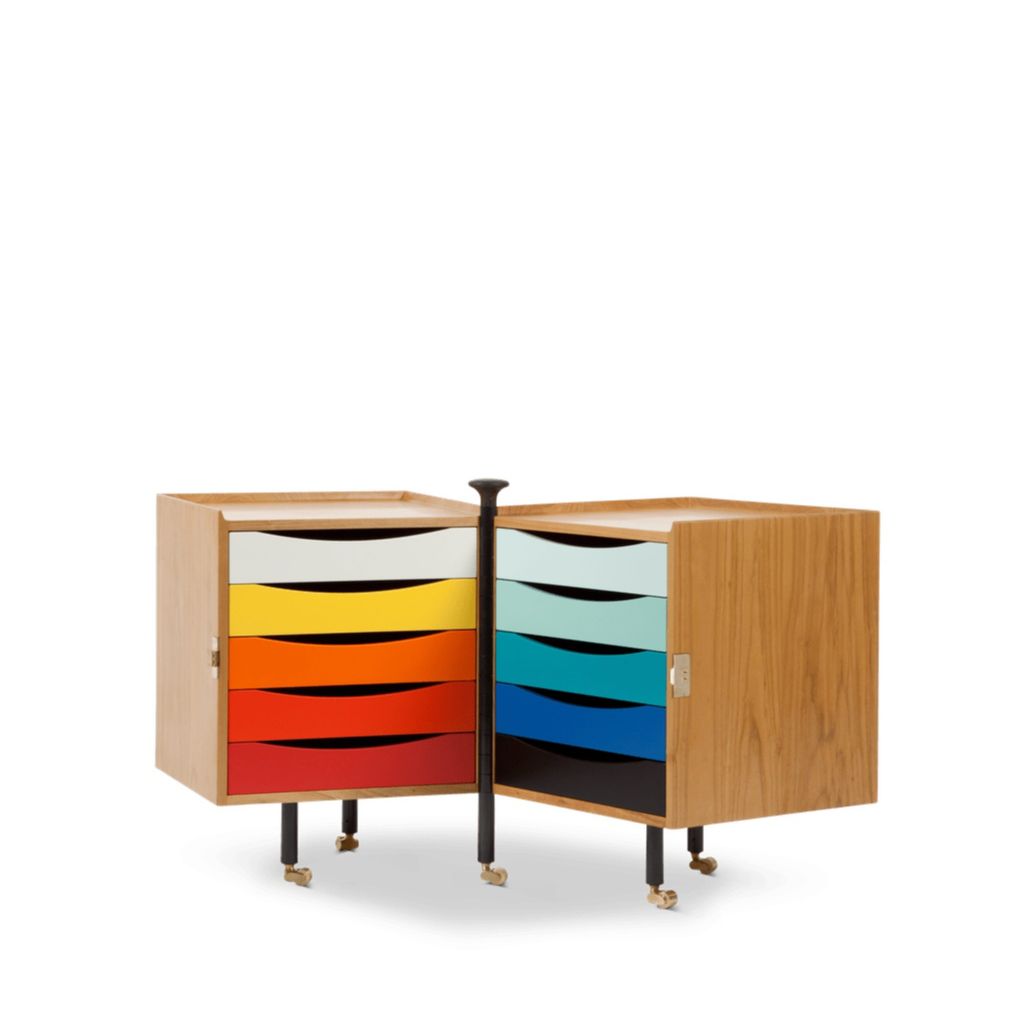
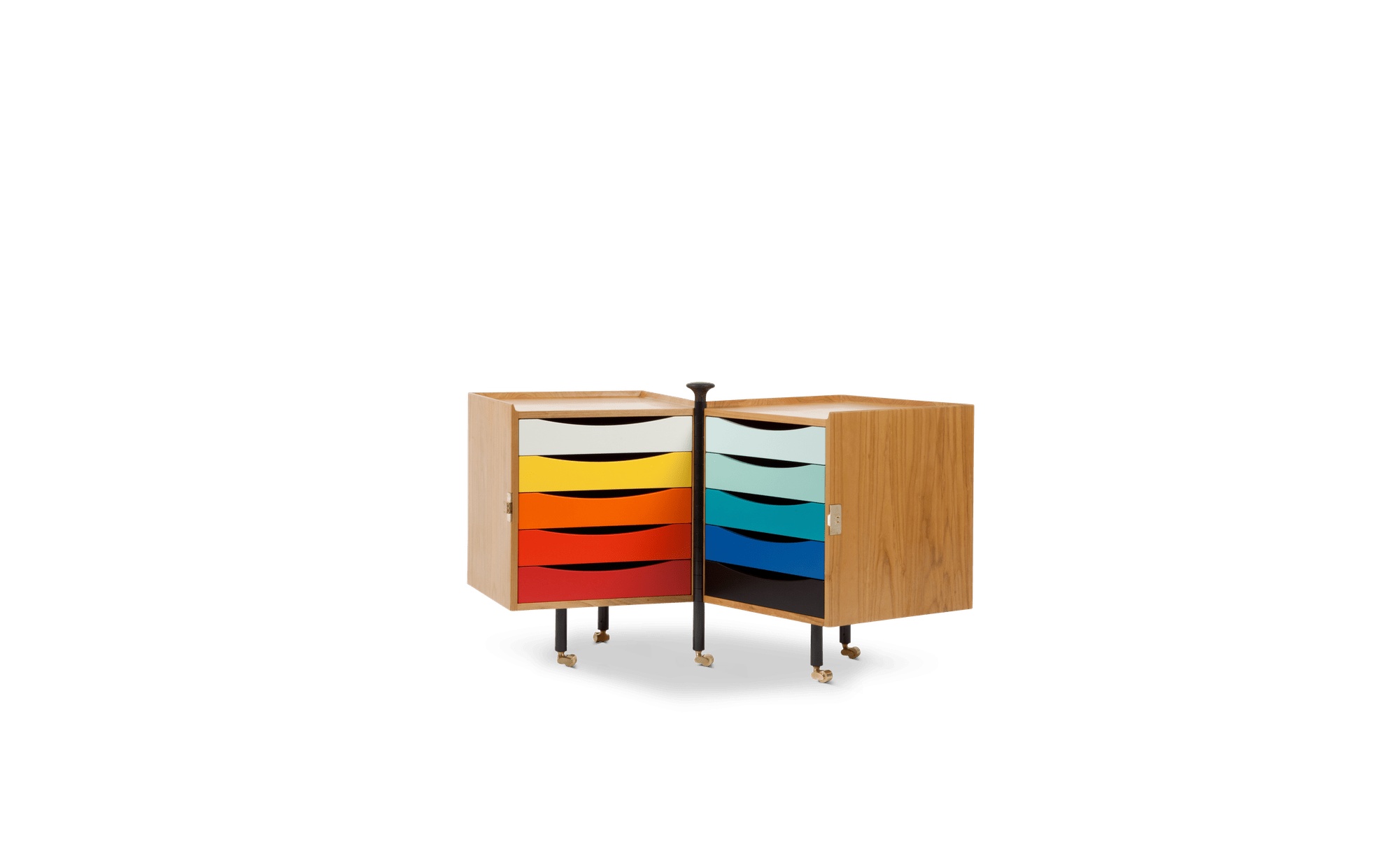
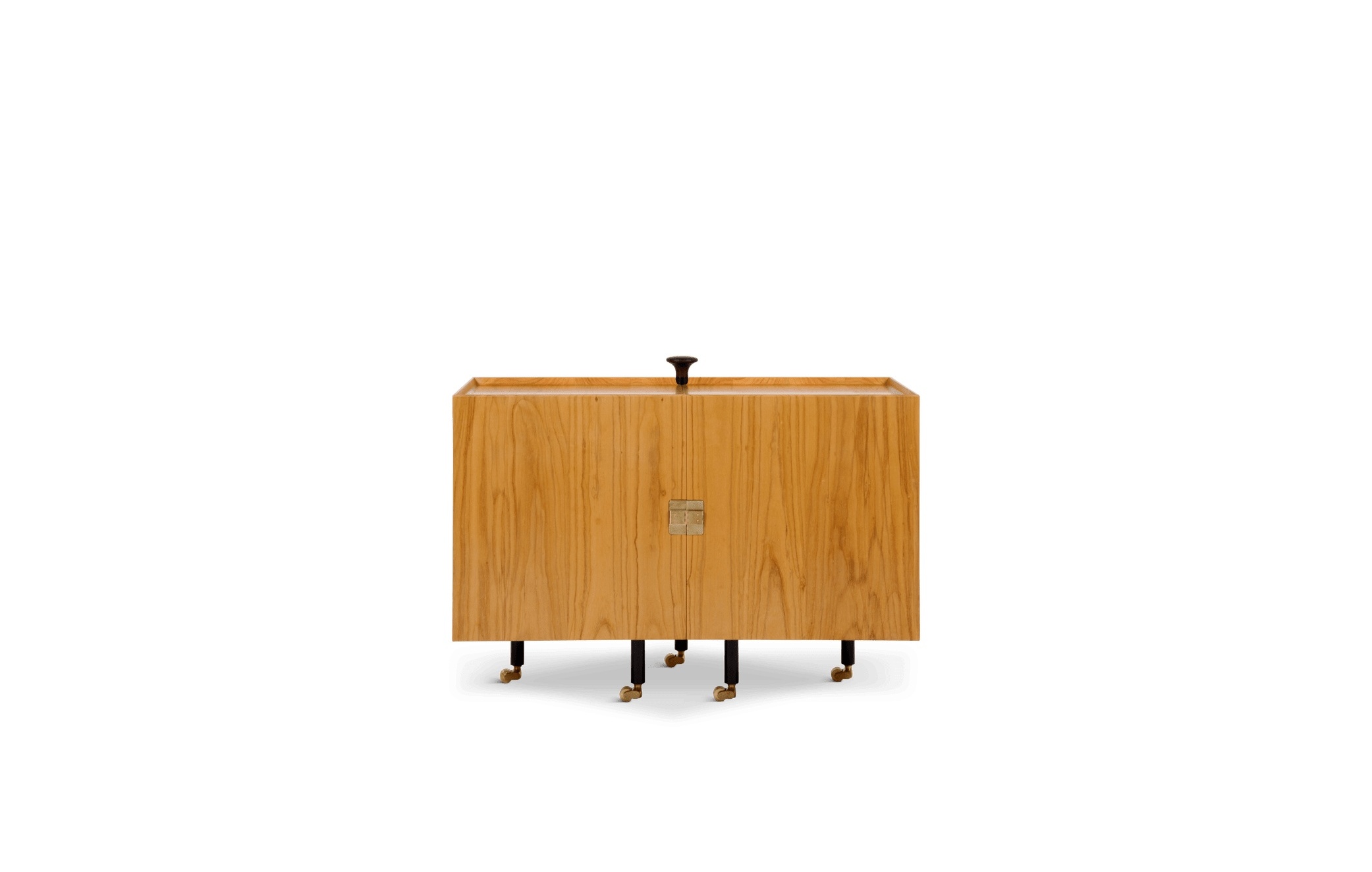
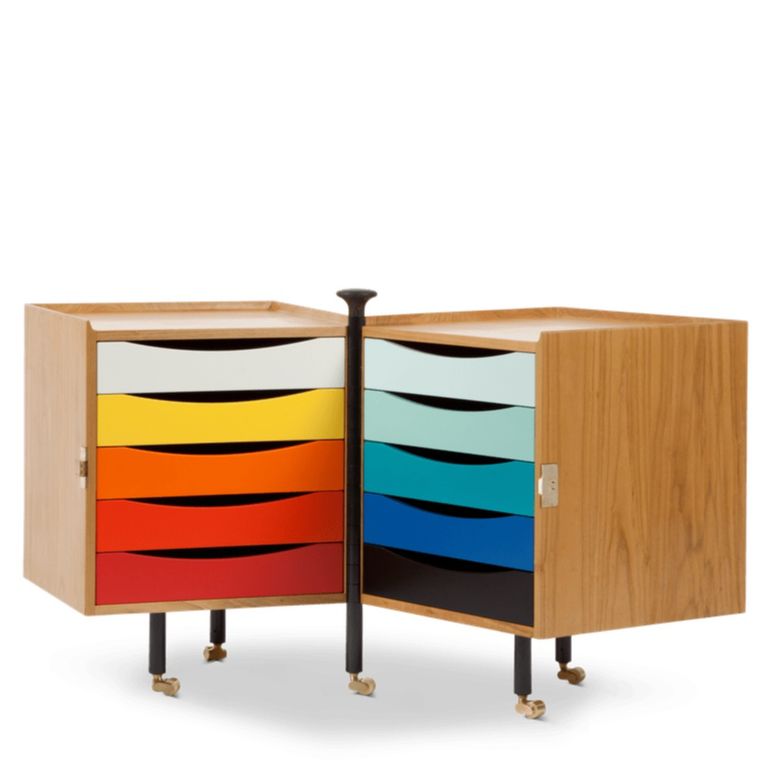
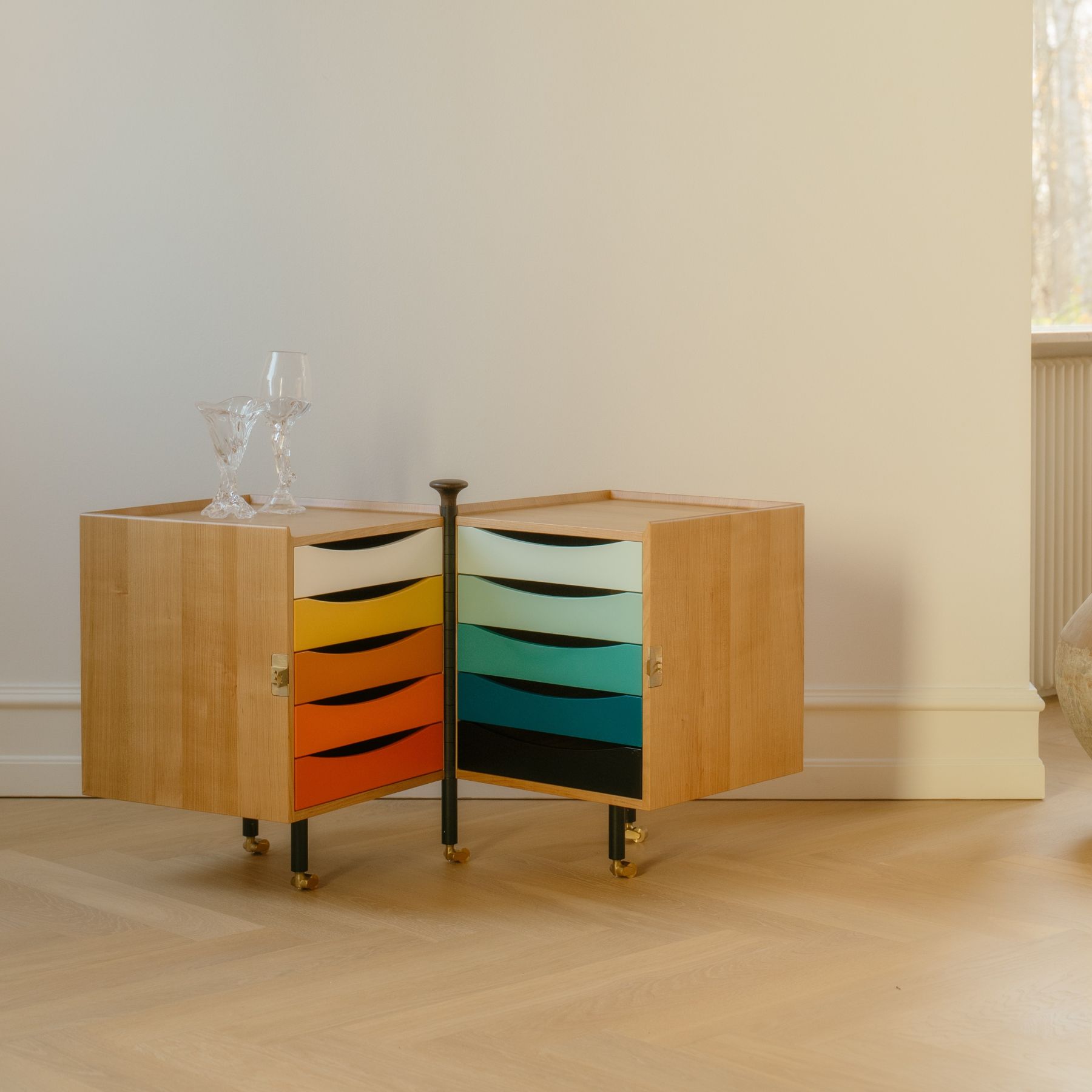
Originally designed to store gloves for Finn Juhl’s wife, Hanne Wilhelm Hansen, the Glove Cabinet was presented at the 1961 Cabinetmakers’ Guild Exhibition as part of an experimental bedroom suite. Crafted from Japanese cherry wood with colourful painted drawers, the cabinet reflects a playful shift from Finn Juhl’s earlier work, featuring burnished steel legs with brass fittings and wheels.
The exhibition in 1961, where Finn Juhl presented the Glove Cabinet, marked Finn Juhl’s 25th anniversary and became his last exhibition of that kind. The exclusive cabinet opens up like a jewellery box and reveals a daring and colourful interior. Finn Juhl took part in the Cabinetmakers' Guild Exhibition in 1961, where he presented the small and delicate Glove Cabinet as part of a bedroom suite which was originally designed for Hanne Wilhelm Hansen. The bedroom was experimental in its expression and stood in stark contrast to much of Finn Juhl’s earlier work. He consciously sought out a different expression, and the room evoked a playfulness in terms of shapes and materials.


BRAND HIGHLIGHT
Today, the House of Finn Juhl by OneCollection exclusively manufactures his sculptural and iconic furniture. More than 40 of his classic masterpieces are crafted to the most exacting standards, with the utmost respect for their original heritage.Tollgard is proud to represent Finn Juhl at its London showrooms. Among the pieces available is the Chieftain chair, “France chair and 109 chair” which is one of the designer’s most celebrated pieces, designed at the peak of his career. When it was presented in 1949, it marked a renewal of Danish furniture design.
Visit Brand
Visit Brand
DESIGNED BY
Finn Juhl
Rather than thinking in terms of practical construction, Finn Juhl had the mind-set of a sculptor, when he shaped a piece of furniture. In the 1940s and 1950s, this way of working had never been seen before. His ambition was to design furniture with movement and life. Finn Juhl took pride in making both the structurally supportive elements of the furniture and the seated person look as though they are floating.
more products
more products