

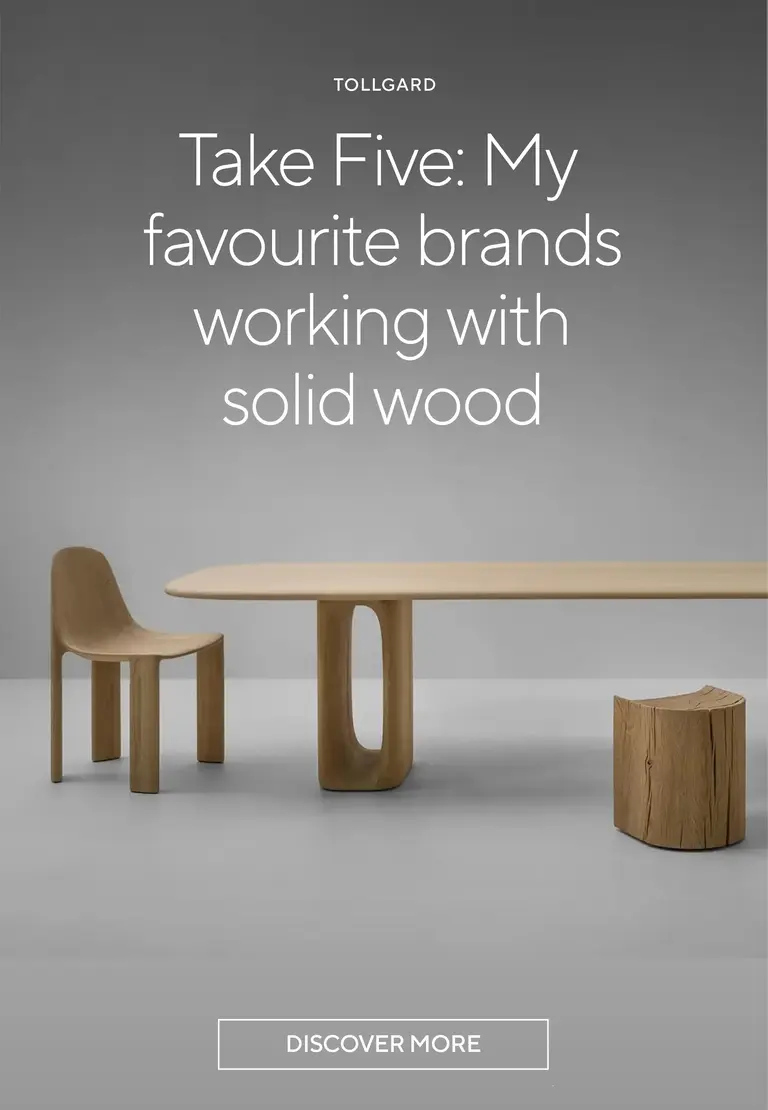
Take Five: My favourite brands working with solid wood
Take Five. A series in which I empty my pockets and set out the things I keep going back to - magazines, hotels, books, restaurants, furniture and lighting brands - and try to say honestly why. It is not a ranking, and nothing in it is sponsored. Think of it less as a list of recommendations than as being handed the pile from beside my desk.
This time, five makers who work in solid wood. One declaration before we begin: we represent all five in our showrooms, and you should read what follows knowing it. I would rather say so plainly than be coy. The order runs the other way round from the one you might suspect, we went looking for these makers because of how they treat timber, and we have kept working with them for the same reason.
Solid wood is unforgiving. It moves with the seasons, it splits if it is rushed, and it records every decision made by the person who cut it. Veneer forgives; solid timber does not. That is precisely why it is worth the trouble. A solid piece can be sanded back and repaired by a grandchild, which is not true of many things.
Van Rossum
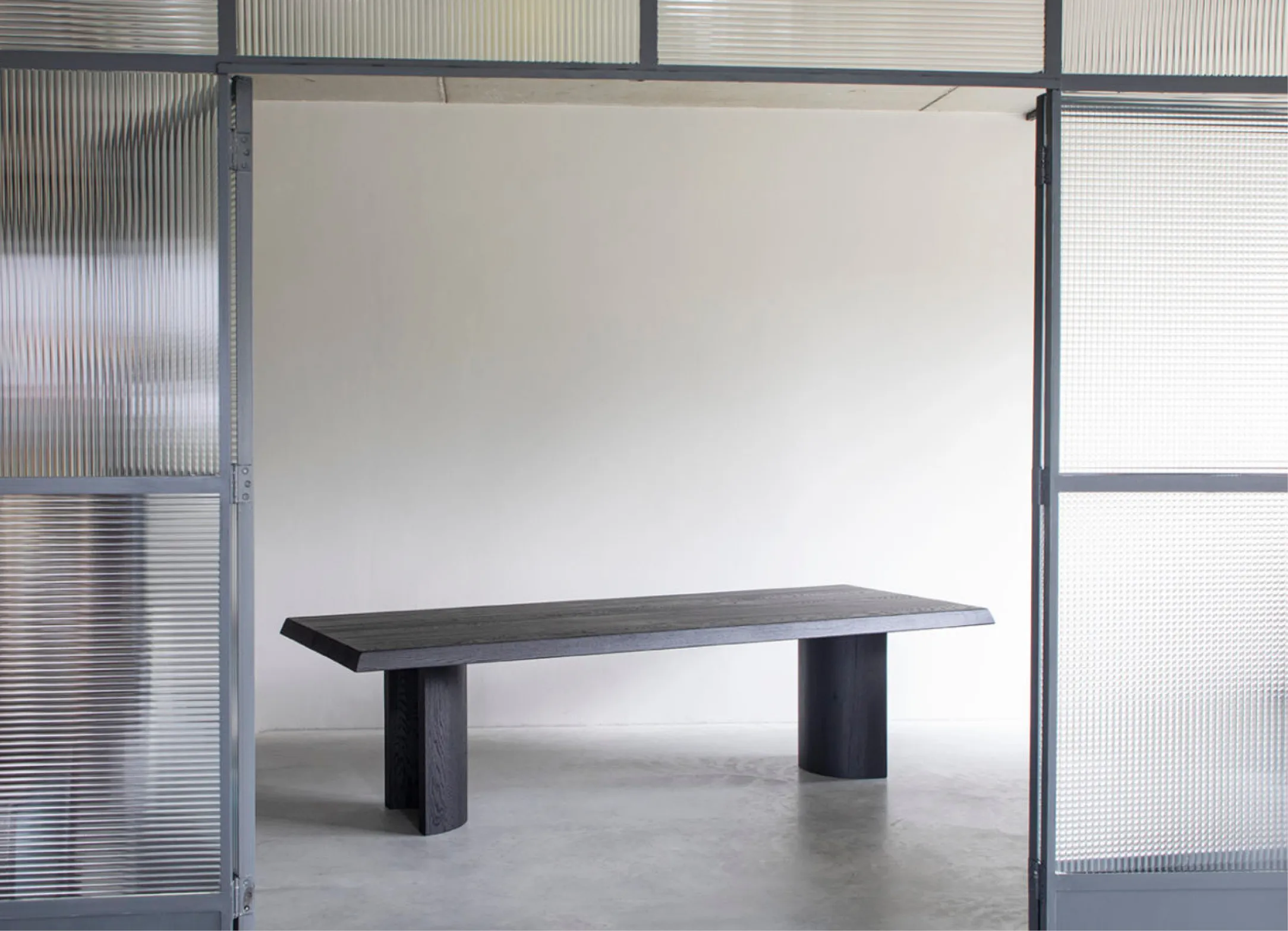
The one that taught me patience. Van Rossum has been making by hand in its Dutch workshop since 1978, in French oak, and the timber is rested for years before anyone is allowed near it with a tool - first in the open, then in climate-controlled chambers until the moisture has settled where it needs to be. That sounds like housekeeping. It is actually the whole product. Oak that has not been given its time will move in a London flat with underfloor heating, and no finish will rescue it. They are also the best I know at end grain, cutting across the trunk so the growth rings read as the surface itself.
Ceccotti Collezioni
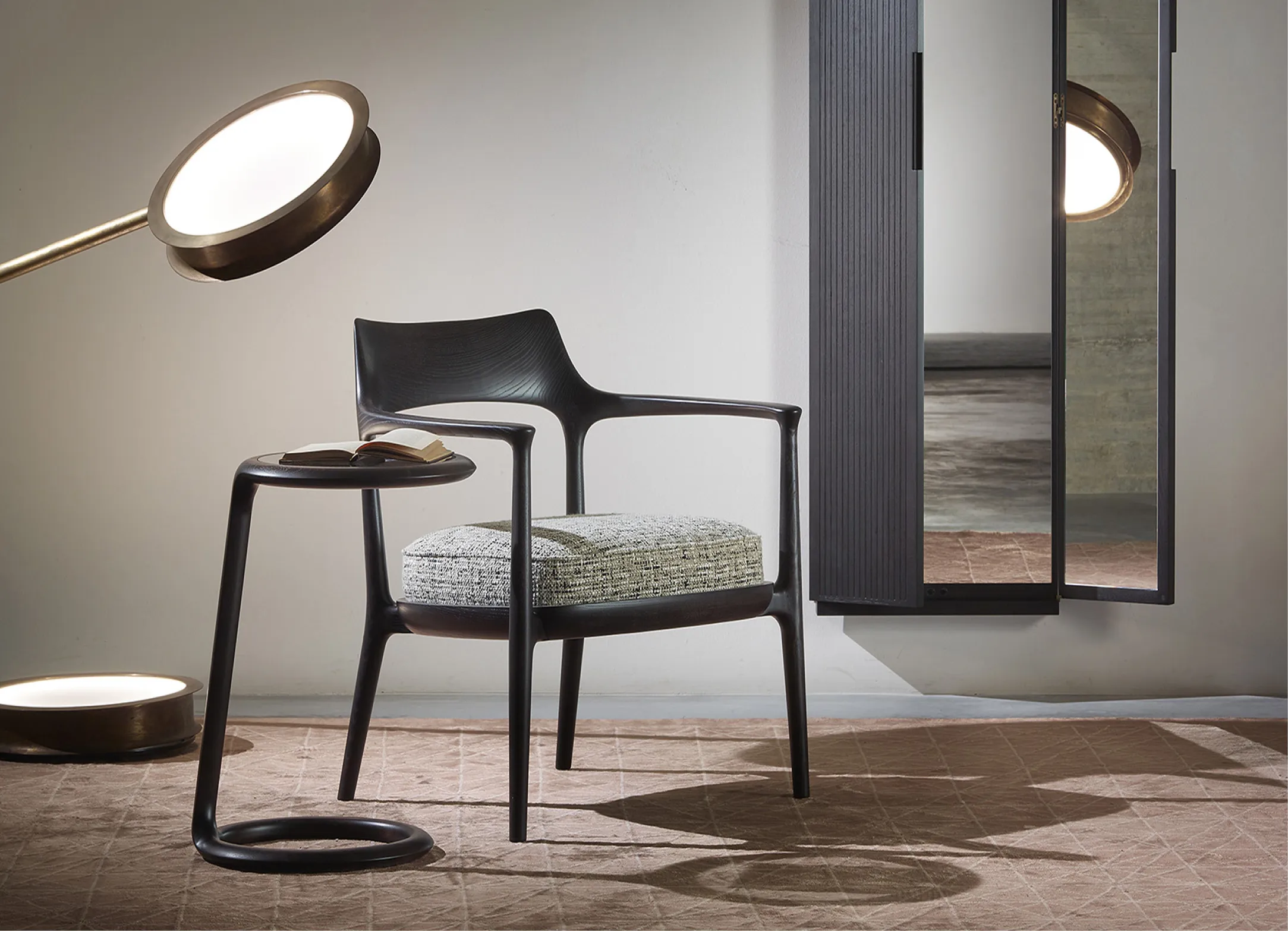
The one where wood behaves like a drawn line. Ceccotti works out of Cascina, near Pisa, and has been at it for some sixty years, turning solid timber into shapes that look sketched rather than cut. The tapers, the splayed legs, the way a back rail curves away from you - none of it is achievable in anything but solid wood, and very little of it is achievable by machine alone. I should declare the closest interest of all here: we hold Ceccotti for the UK and run their London showroom. I would still put them first.
Riva 1920
The one with the longest memory. Founded in Cantù, in the Brianza, in 1920 and now run by the fourth generation of the family, Riva passed its centenary before most brands manage a rebrand. What I admire most is where the timber comes from. Alongside wood from managed cuts, they work in ancient Kauri raised out of New Zealand swamps, in Lebanese cedar, and in briccole - the oak mooring posts pulled from the Venice lagoon when they are replaced, still scarred by the water. Finished in natural waxes and oils and nothing else. A table that spent its first life as a navigation post in Venice carries a story no showroom needs to invent.
Porada
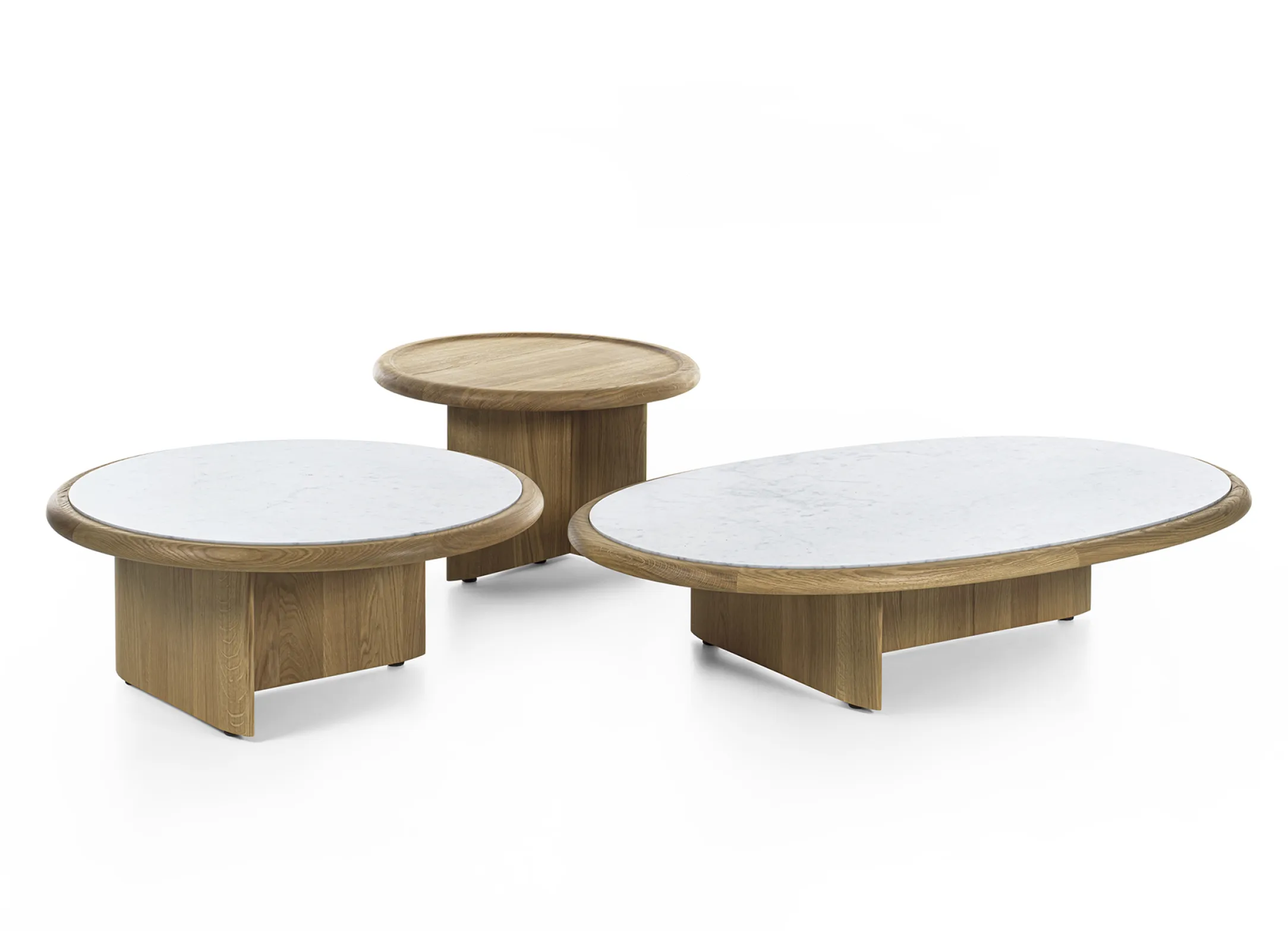
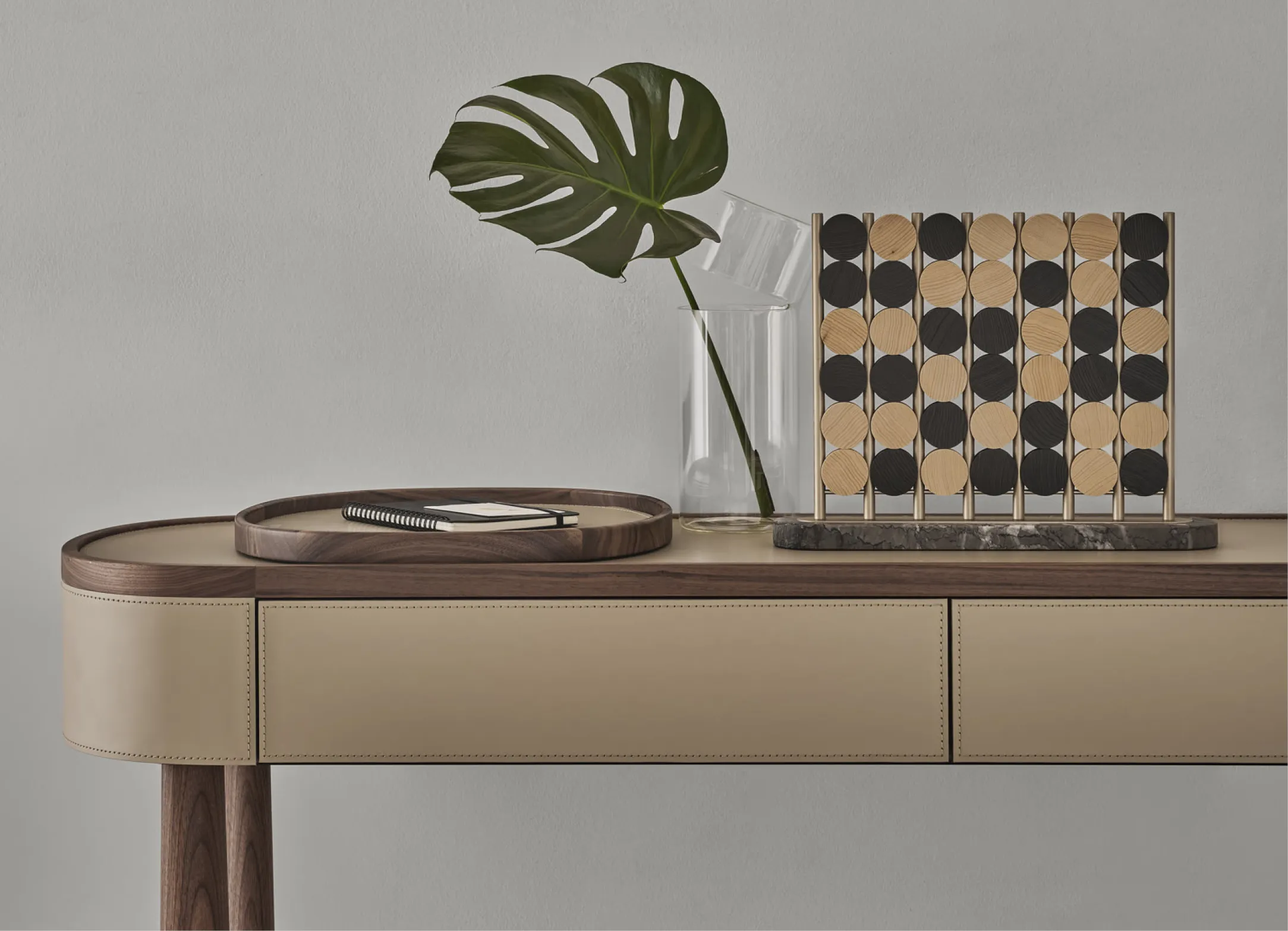
The one that made me look properly at walnut. Porada was established in 1968 in Cabiate, near Como, with a chair-making tradition in the family that goes back to the 1940s, and canaletta walnut runs through the collection like a signature. Their strength is joinery you can read: the turned leg, the curve where two solid sections meet, proportions worked out in timber rather than imposed on it. If a client wants to understand why solid wood costs what it does, I put their hand on a Porada table edge.
Jeroen de Ruddere
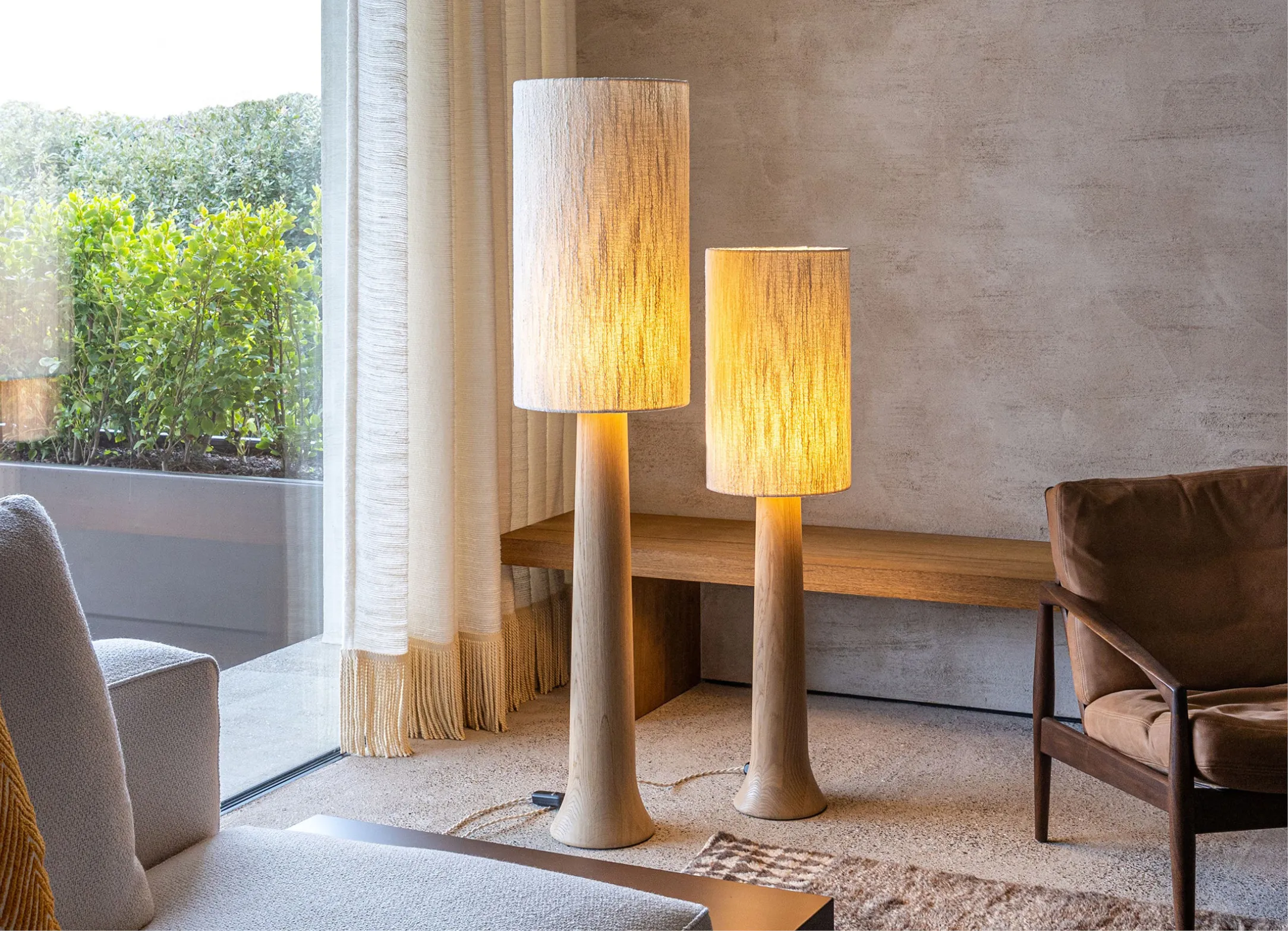
The newest name here, and the only one who does not make furniture. De Ruddere is a Belgian maker of sculptural lighting turned from solid oak, walnut and mahogany - floor and table pieces where the timber is the object itself rather than a stand for a shade. He describes what he is after as ‘sculptural lighting that brings presence into a space: timeless in character, defined by architectural balance and an instinctive respect for natural materials’. He belongs on this list because his lamps read as well switched off as lit, which is as close to a definition of functional sculpture as I can give. We took him on this year, and I suspect he will be with us for a long time.
What the five have in common
In every case, solid wood is a decision rather than a finish. It costs more, it takes longer, it limits what can be drawn, and it obliges the maker to understand a material that was alive and still behaves as though it might be. What you get back is a piece that ages instead of degrading, and that can be repaired rather than replaced.
It is also the clearest argument I know for buying slowly. A veneered carcass has a lifespan; a solid one has a history.
With a new culture of sustainability slowly moving through all creative industries, the idea of looking hard for an heirloom piece that passes down through generations holds a lot of value. We look hard and buy once.
- Staffan Tollgård, Design Hunter, 2019
These five are what that principle looks like once someone has made it.
Next in the series: My five favourite hotels.